Constellations: seeing a chord as a shape
In Handpan Studio, a chord becomes a drawing. Discover the 3 ways to trace a Constellation: Polygon, Open and Hands.
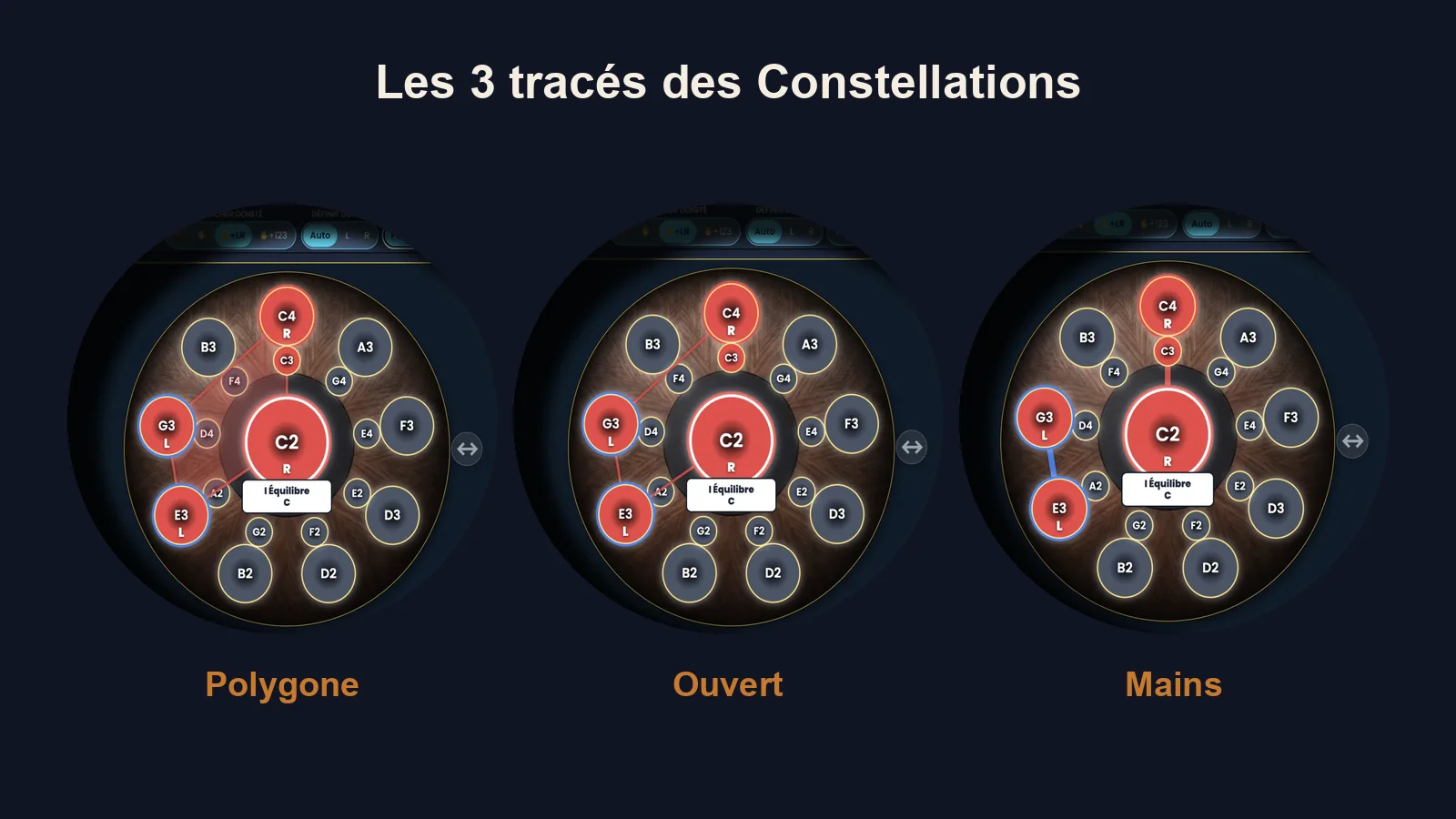
A Constellation is a chord you see rather than a chord you count. In Handpan Studio, the notes that sound together link up with glowing lines and form a recognisable figure. Your eye keeps a drawing, your hand replays it. The app offers three ways to trace that shape: Polygon, Open and Hands.
Why a shape instead of a list
Memorising “D, F, A” means translating every single time. Memorising a triangle sitting at a precise spot on your pan does not: your brain loves shapes. That’s the heart of the ChromaKeys method, which you can explore in Playing handpan by colours. The Constellation is simply the next step: when several colours meet, they draw something.
Handpan Studio lets you choose how that drawing appears, depending on what you want to understand: the overall shape of the chord, the order in which you play the notes, or how they split between your two hands.
The 3 Constellation traces
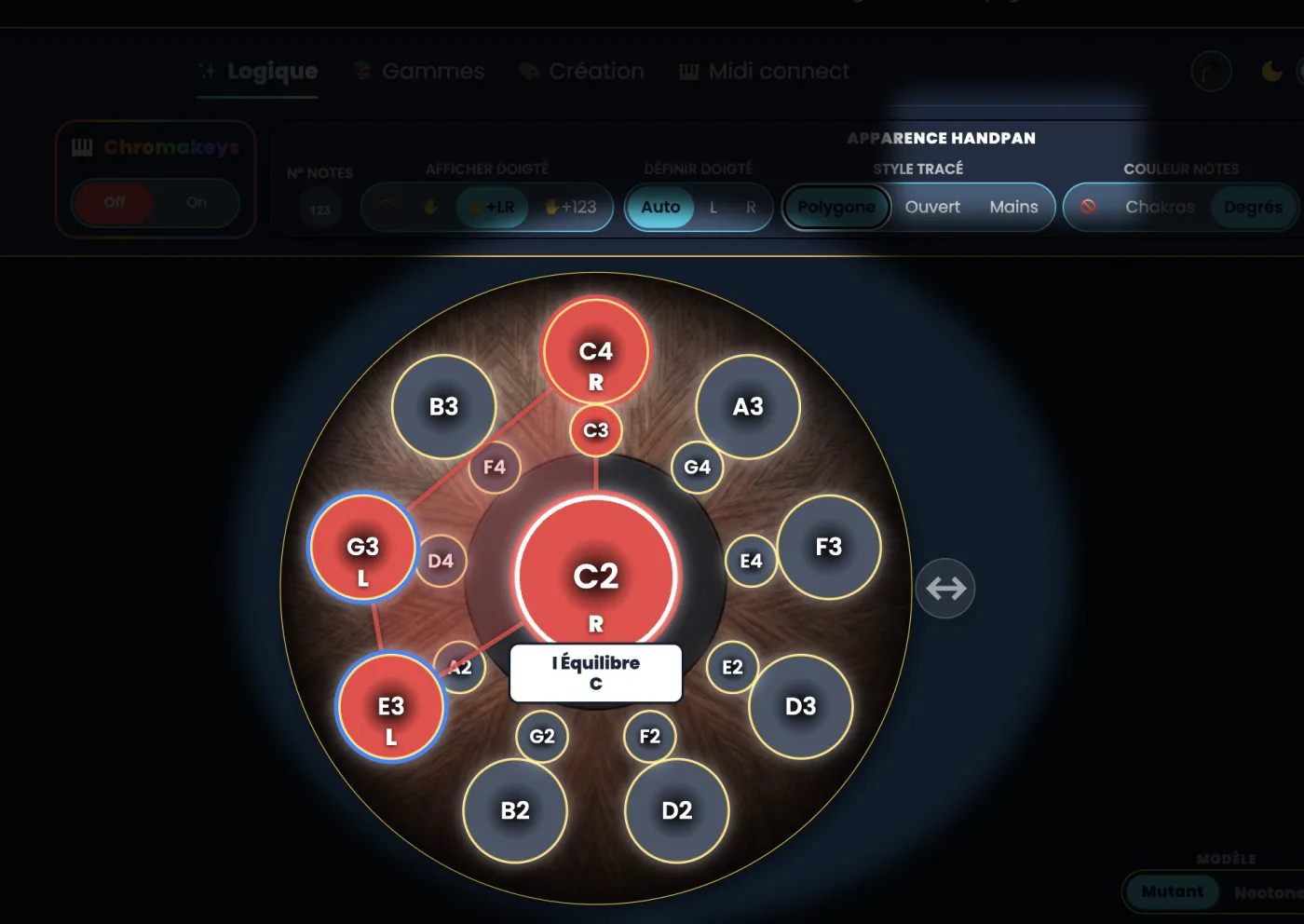
The Polygon: the closed shape
Polygon mode links every note of the chord into a closed figure — a triangle for three notes, a quadrilateral for four, and so on. It’s the most “at a glance” view: you recognise the chord the way you’d recognise a logo. Ideal for memorising a chord and finding it instantly elsewhere on the pan, since the same shape moves around while keeping its silhouette.
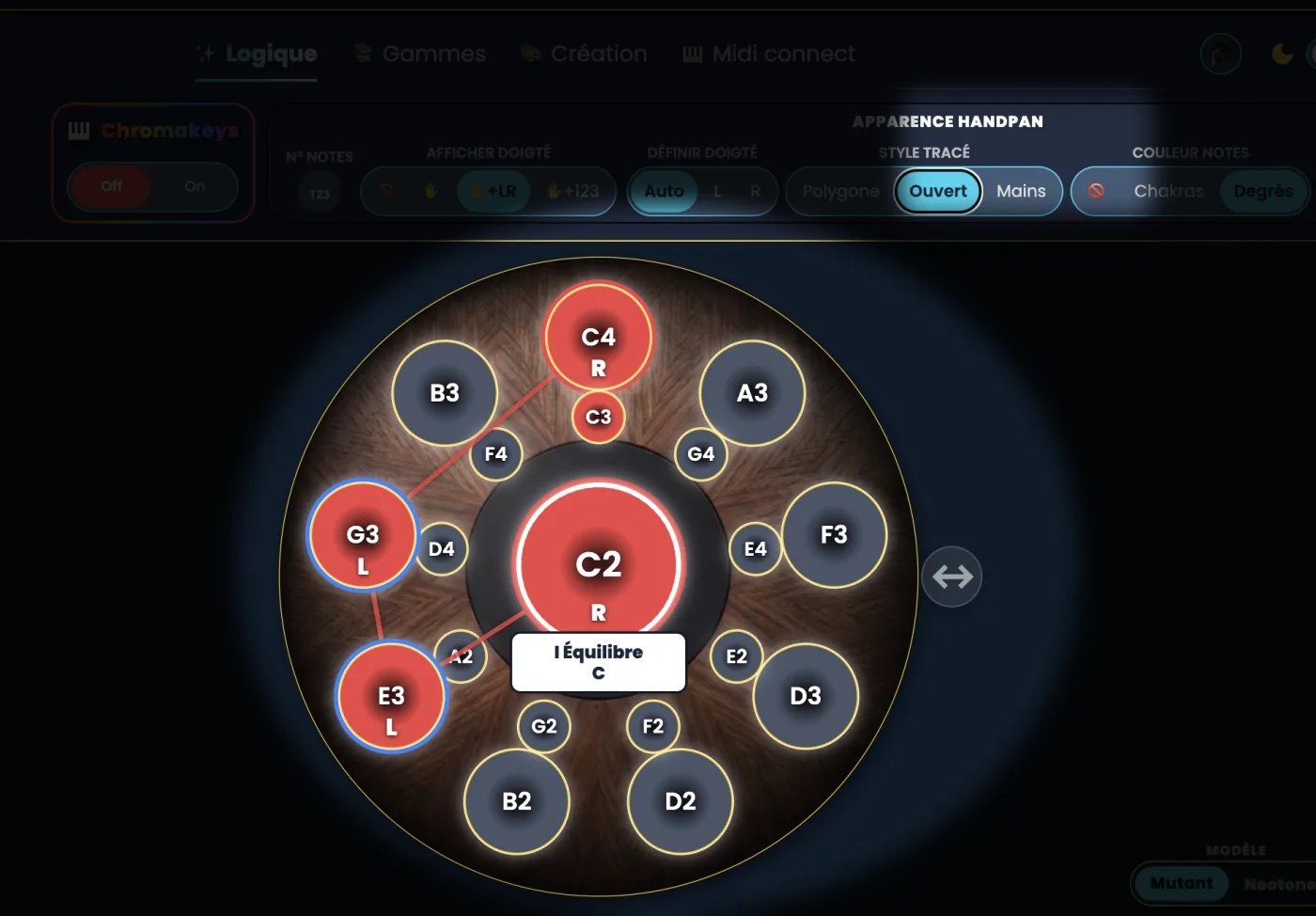
The Open trace: the path of the notes
Open mode doesn’t close the figure: it draws the path from one note to the next, in the order you play them. It’s the view of the gesture. You no longer just see which chord you’re playing, but how your hand travels through it — perfect for working on an arpeggio or a melodic phrase and feeling the direction of the movement.
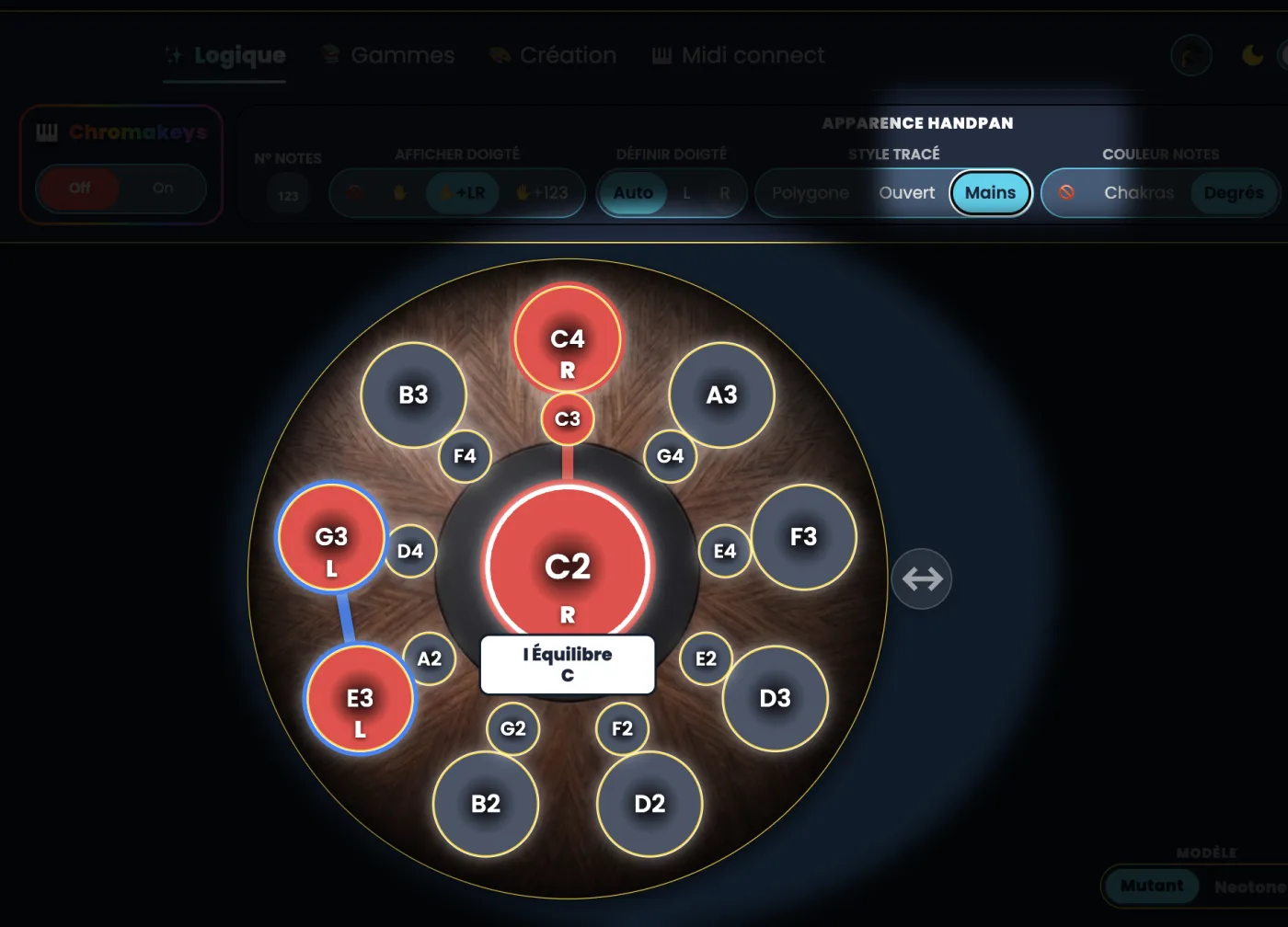
Hands: who plays what
Hands mode colours the trace according to which hand plays each note. At a glance, you know what the left hand does and what the right hand does. It’s a precious cue when a chord splits between both hands, or when you want to balance your playing without tensing up.
Switching between traces
The real comfort is being able to flip between these three views on the same Constellation. You memorise the overall shape with Polygon, work the gesture with Open, then check your split with Hands. Three lights on a single chord, without ever opening a score.
And if you want to invent your own coloured chords, the app lets you compose freely: read Create your own handpan scale to see how creation works (free in acoustic mode, exports carry a watermark).
Constellations make visible what usually stays abstract. You no longer “know” a chord: you see it. Open Handpan Studio and watch your first triangle light up.
Ready to make your colours sing?
Try the app for free, or discover the electronic Neotone handpan.