Microphone for acoustic handpan
The Muling microphone
A microphone designed specifically for the acoustic handpan: clear, precise and faithful capture, with no feedback — on stage as in recording. I tested it thoroughly, here is my full review.

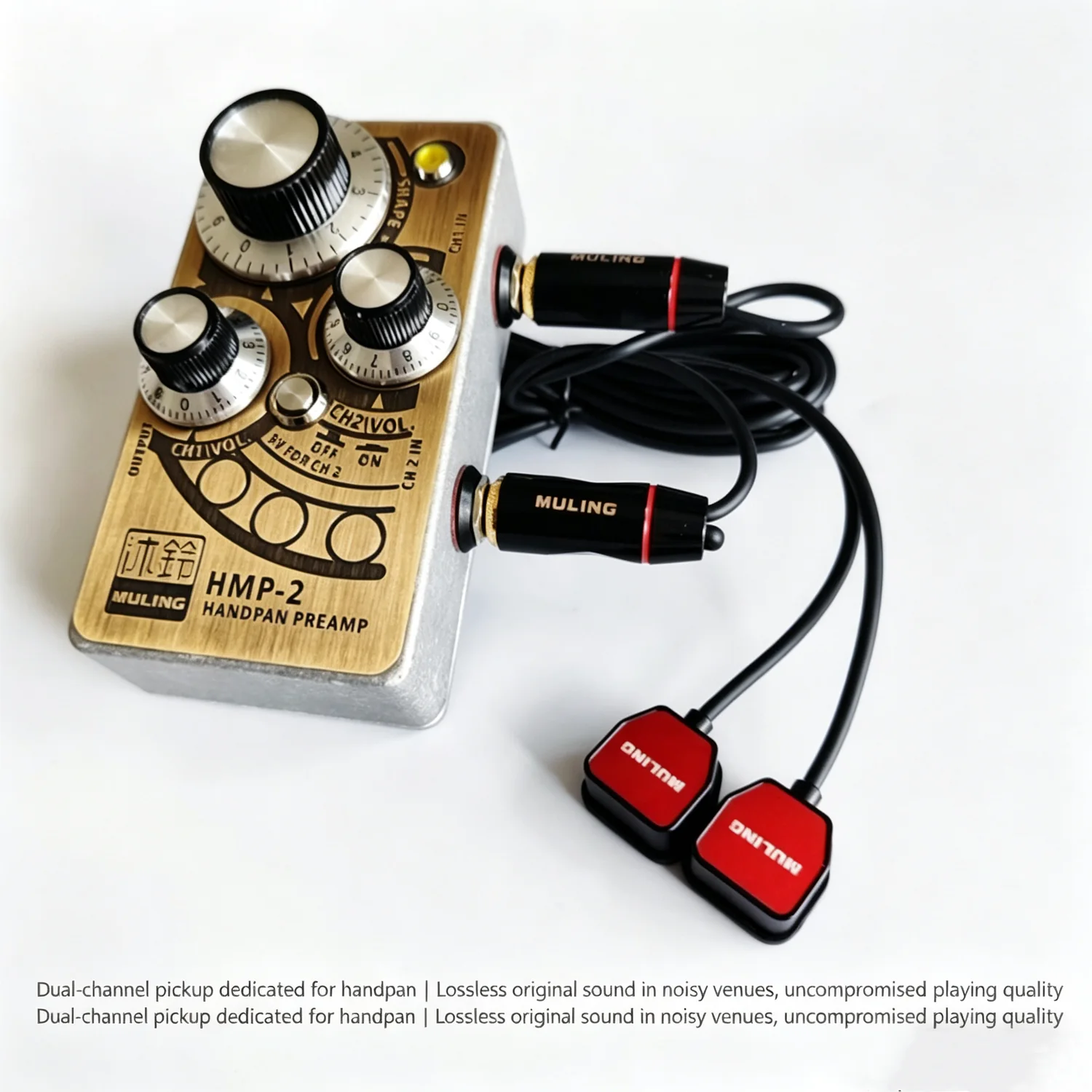
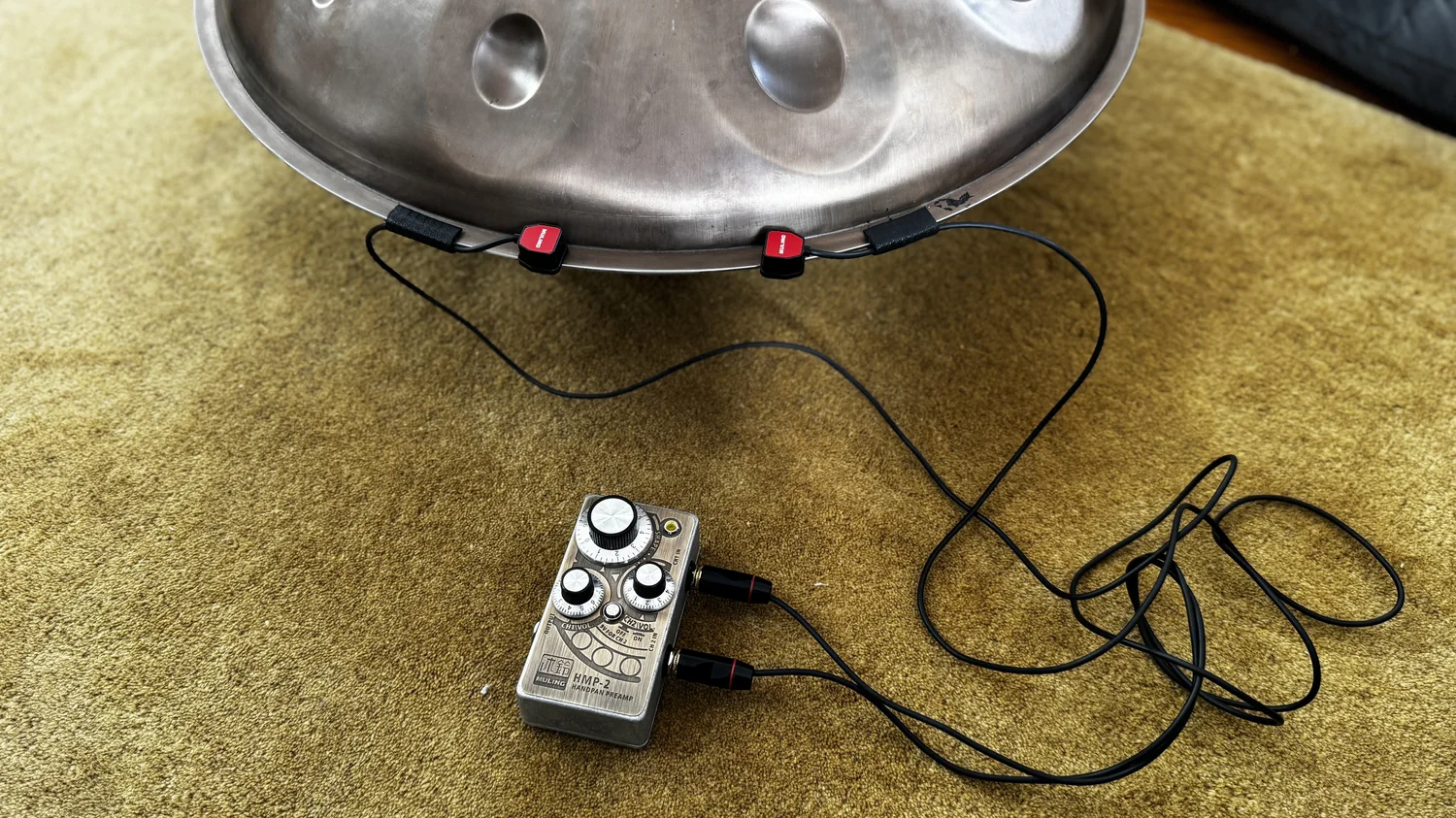
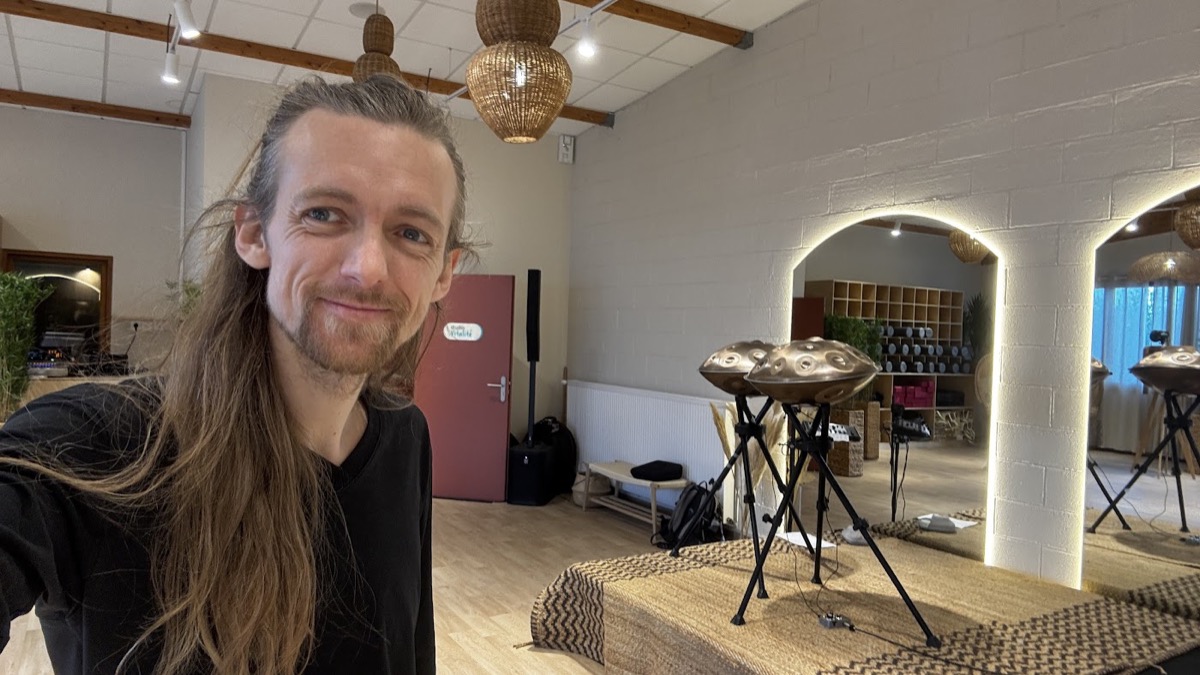
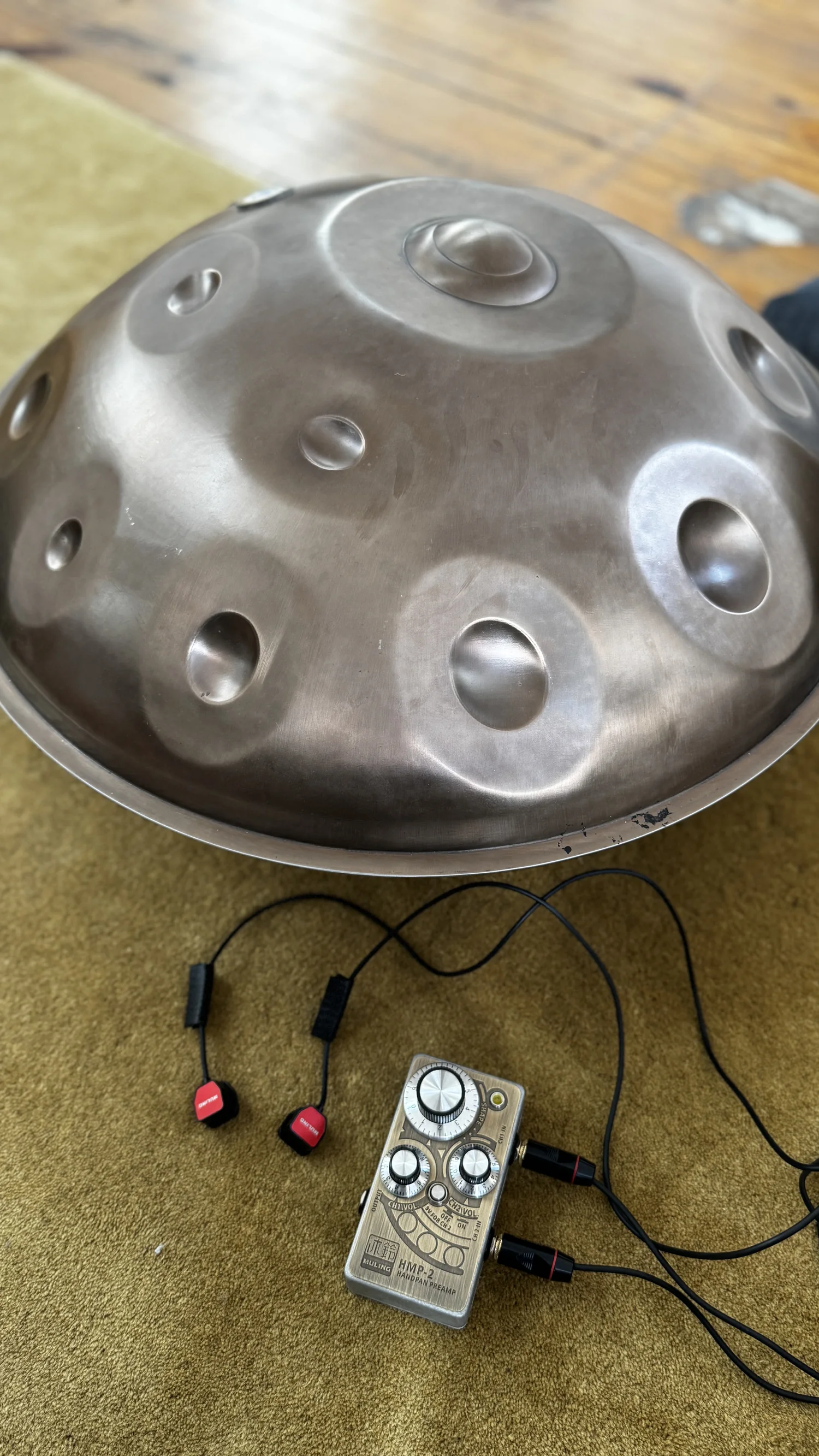
Microphone for acoustic handpan
My full video review
I walk you through the mic in detail: setup, resulting sound, comparisons and use cases.
Why I recommend it
Amplifying an acoustic handpan is a real challenge: general-purpose mics capture the harmonics poorly, and feedback lurks as soon as you turn up. The Muling is built for this specific instrument — it captures the sound at the source, keeps the richness of the harmonics and lets you push the level with no howl. That’s what convinced me to represent it.
Built for handpan
A contact microphone designed for the handpan’s shell and harmonics, not a general-purpose mic repurposed.
No feedback
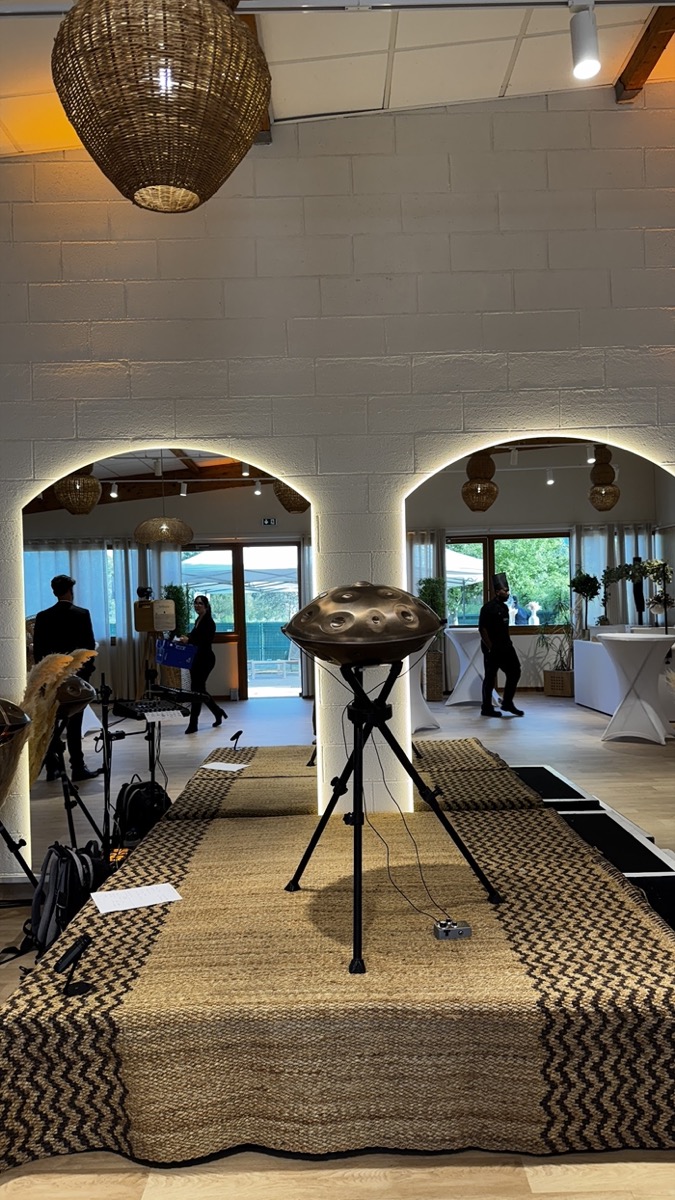
Capture happens in contact with the instrument: you raise the volume on stage without fearing howl.
Stage and studio
Faithful enough for recording, sturdy and practical enough for live.
What the set contains
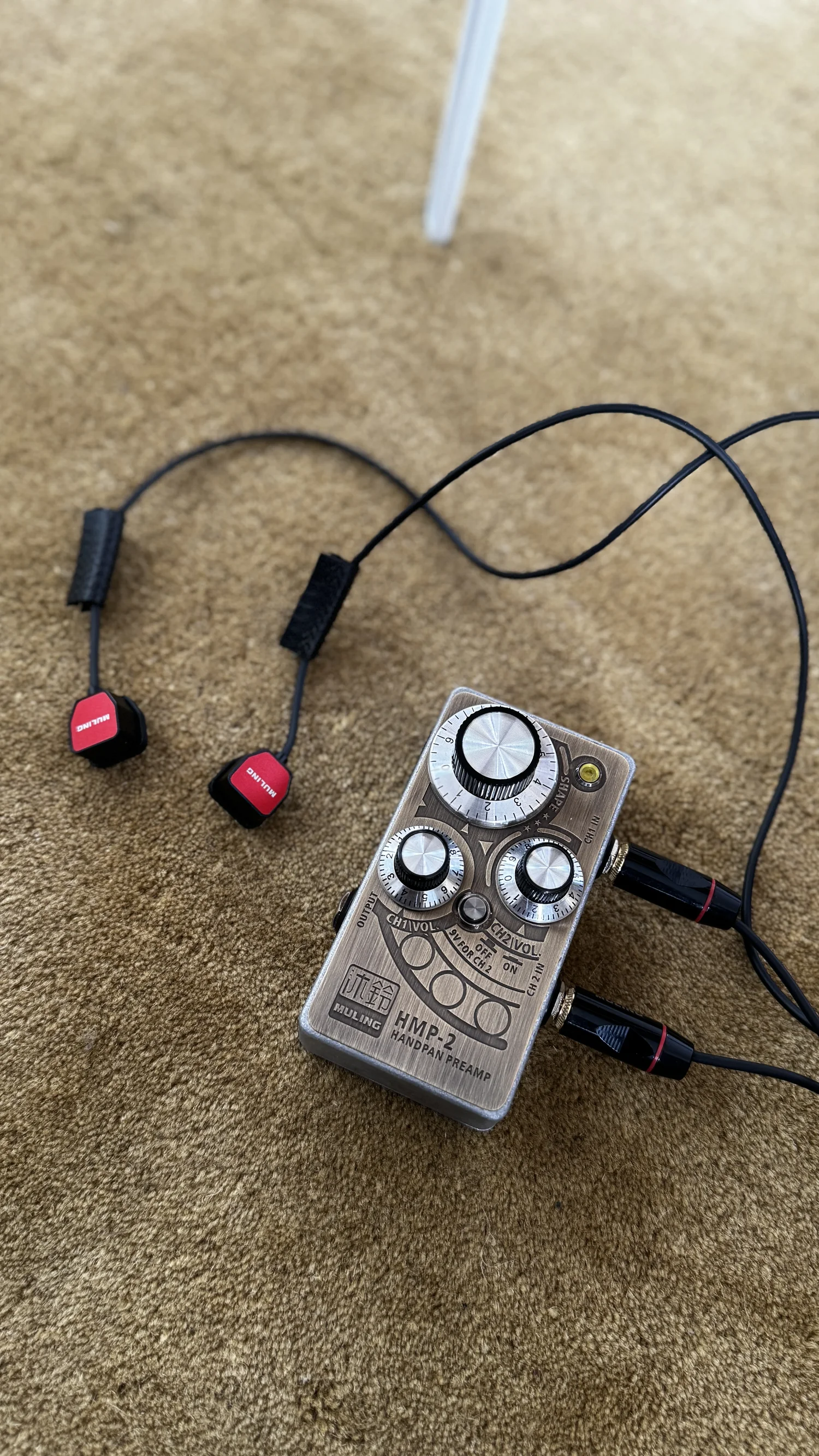
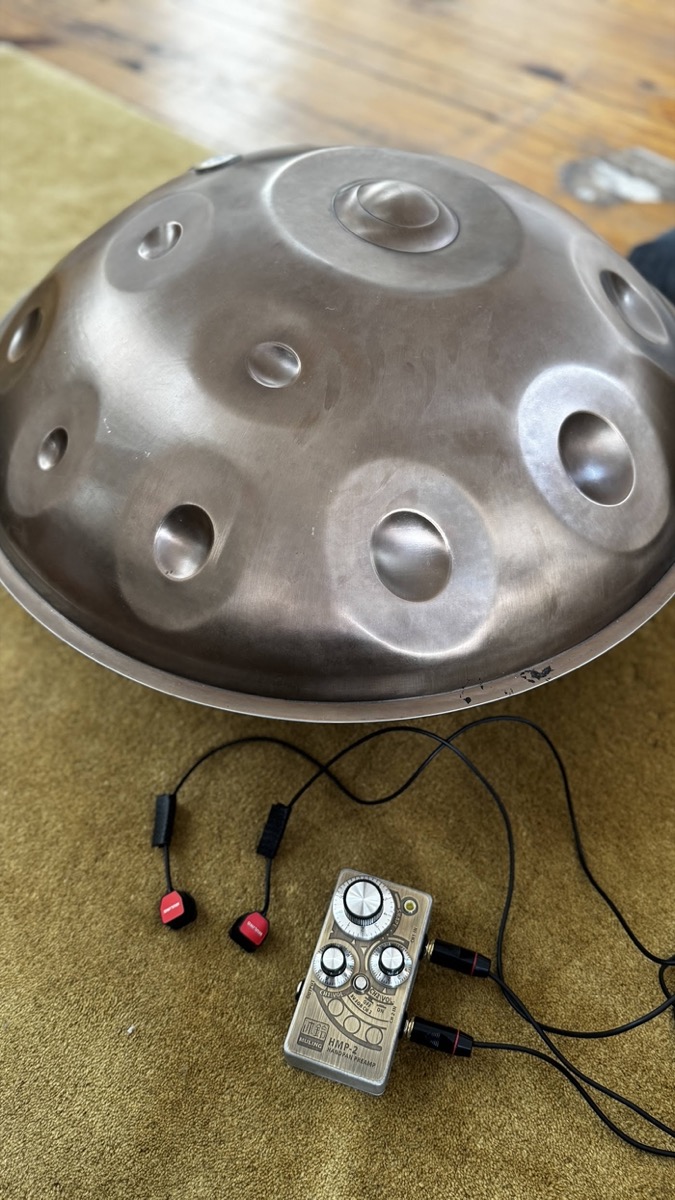
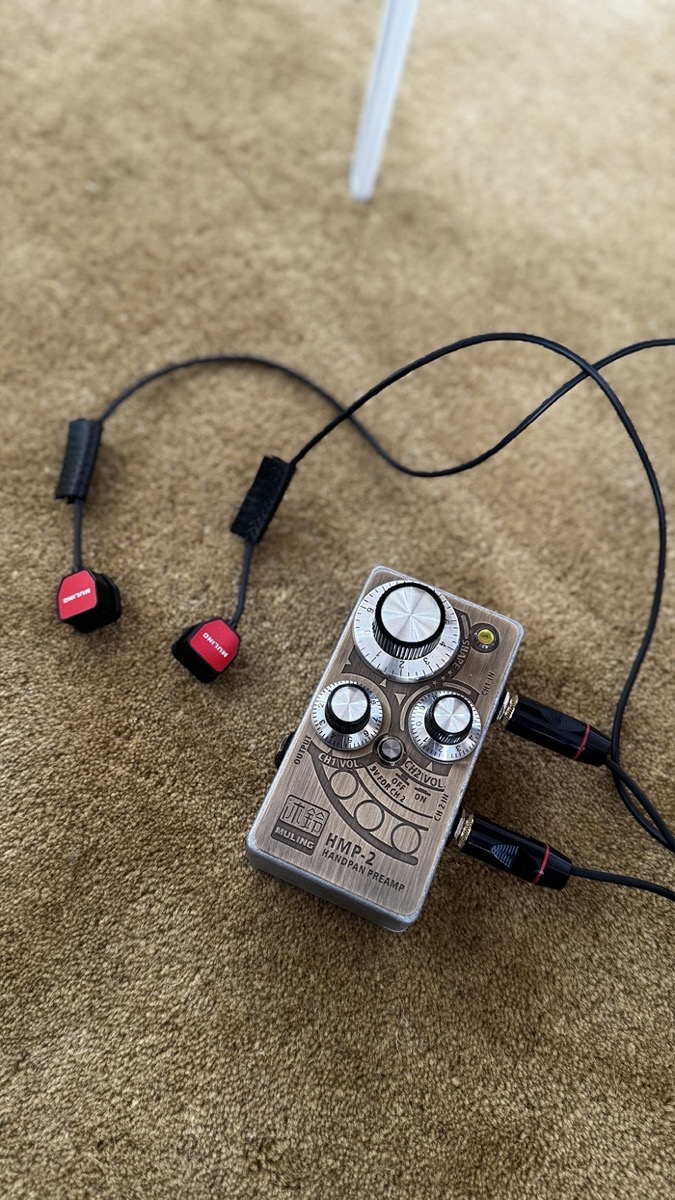
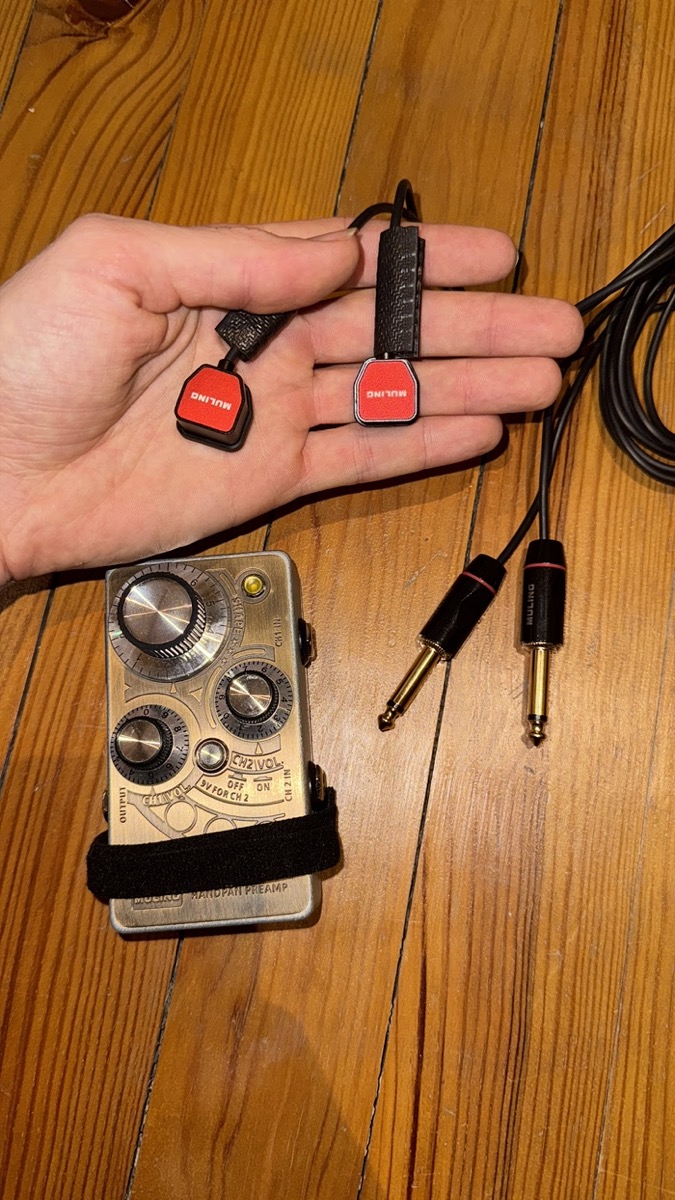
The HMP-2 set is complete: two capsules and the preamp, ready to play on one or two handpans.
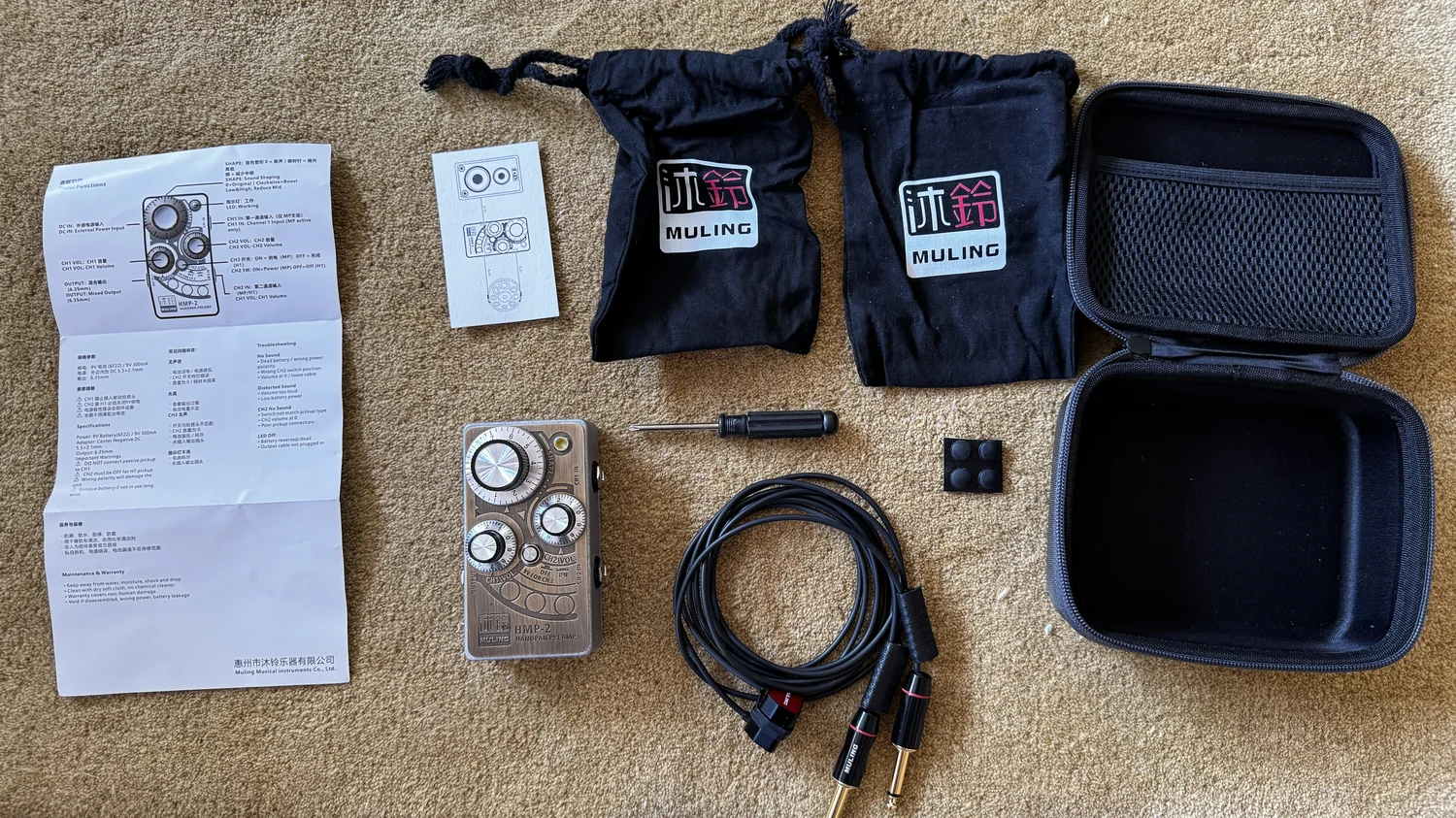
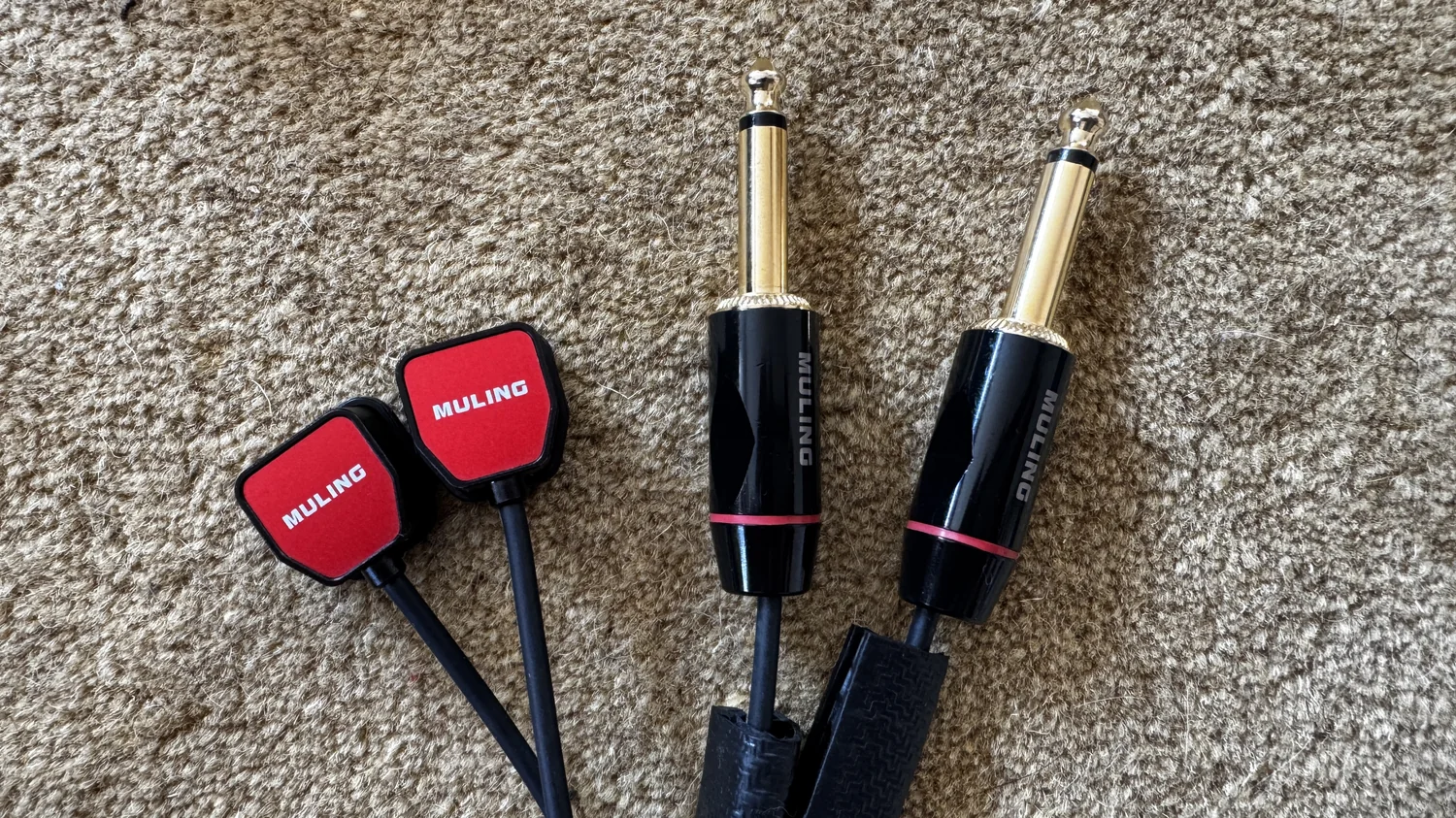
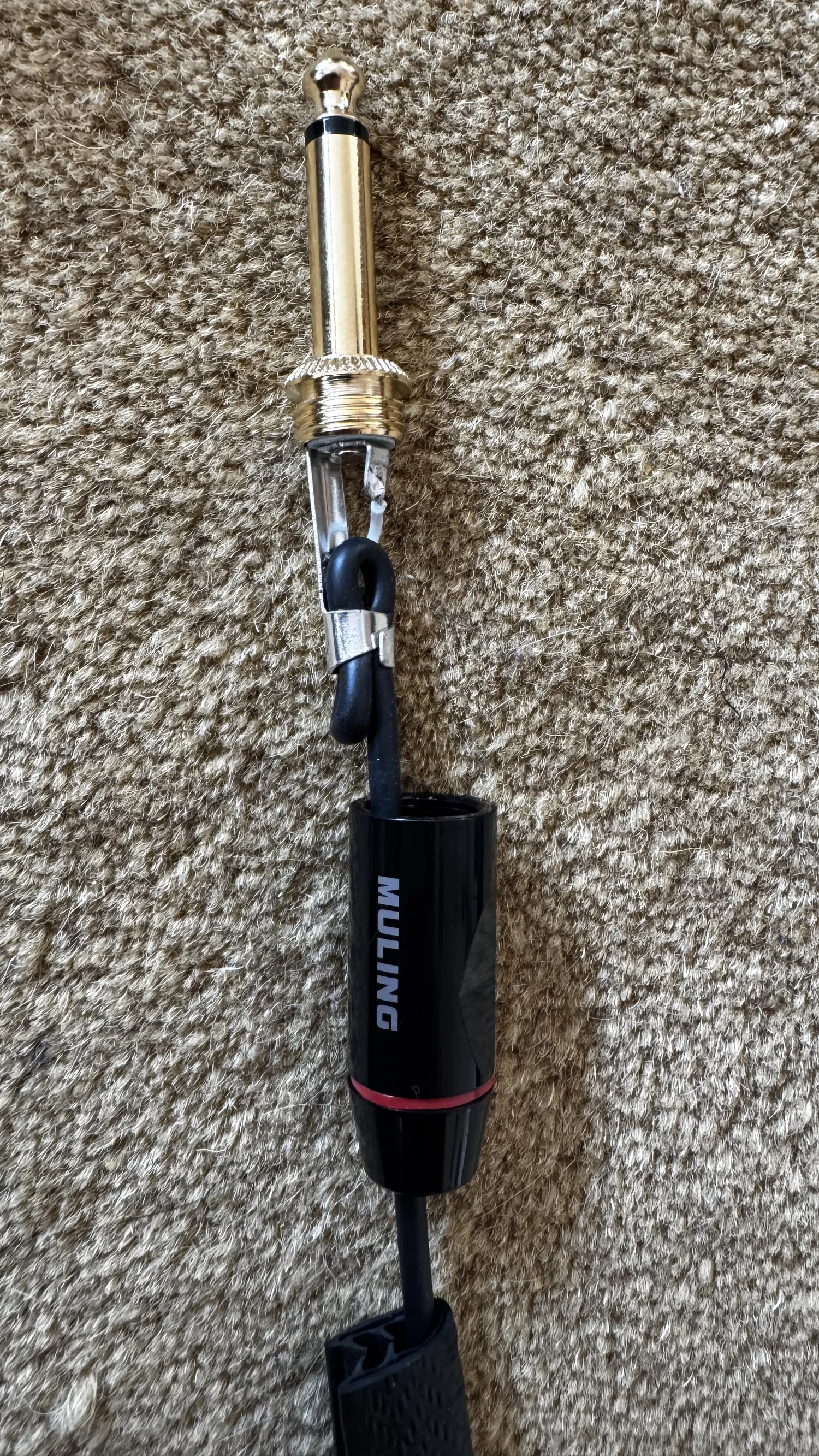
- 2 magnetic contact capsules (active mics)
- 1 two-channel HMP-2 preamp
- 2 gold-plated 6.35 mm jack cables
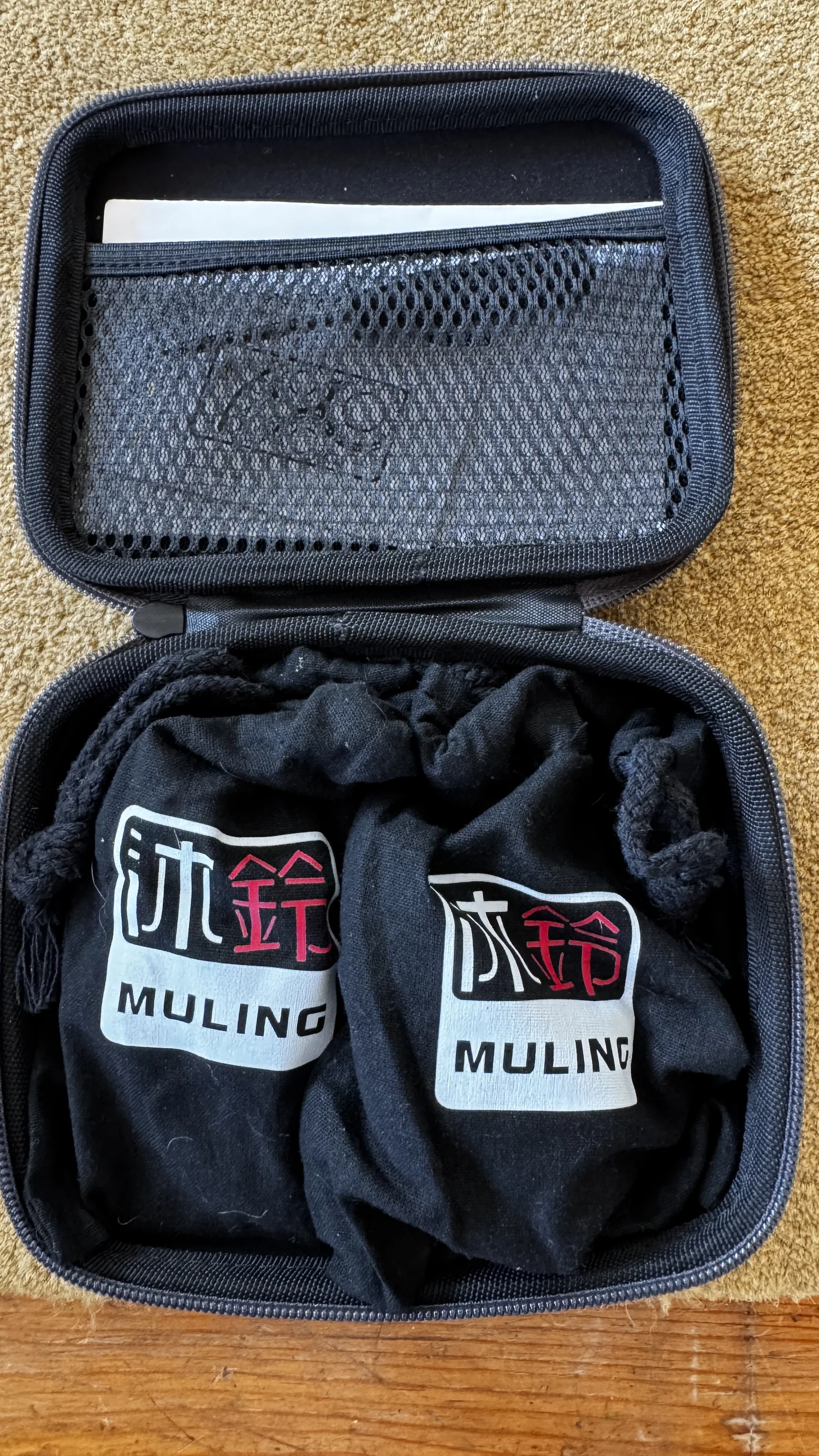
- 1 hard carrying case
- 2 fabric storage pouches
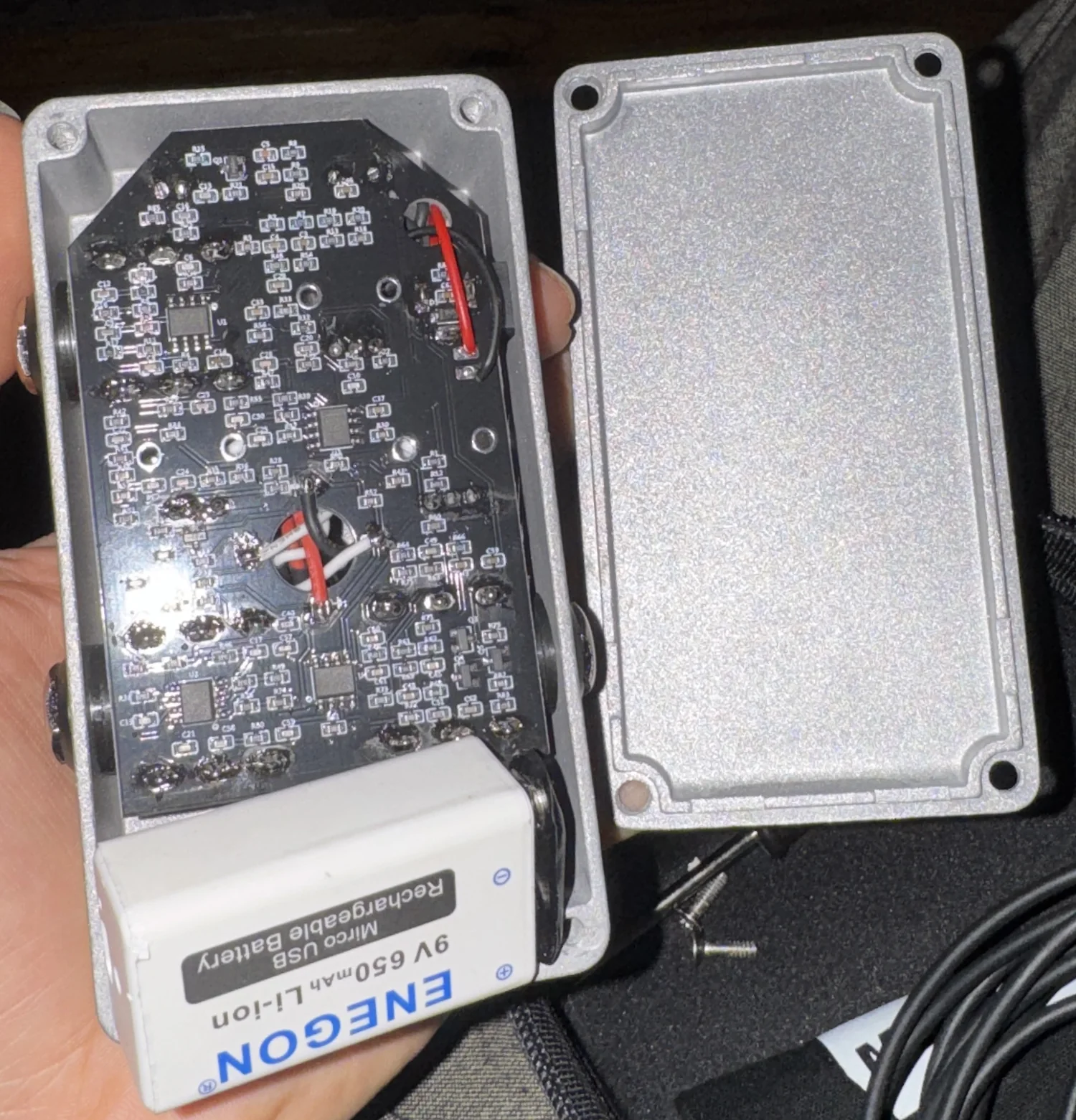
- 1 screwdriver to open the preamp (battery access)
- 4 adhesive mounting pads
- The maker’s manual
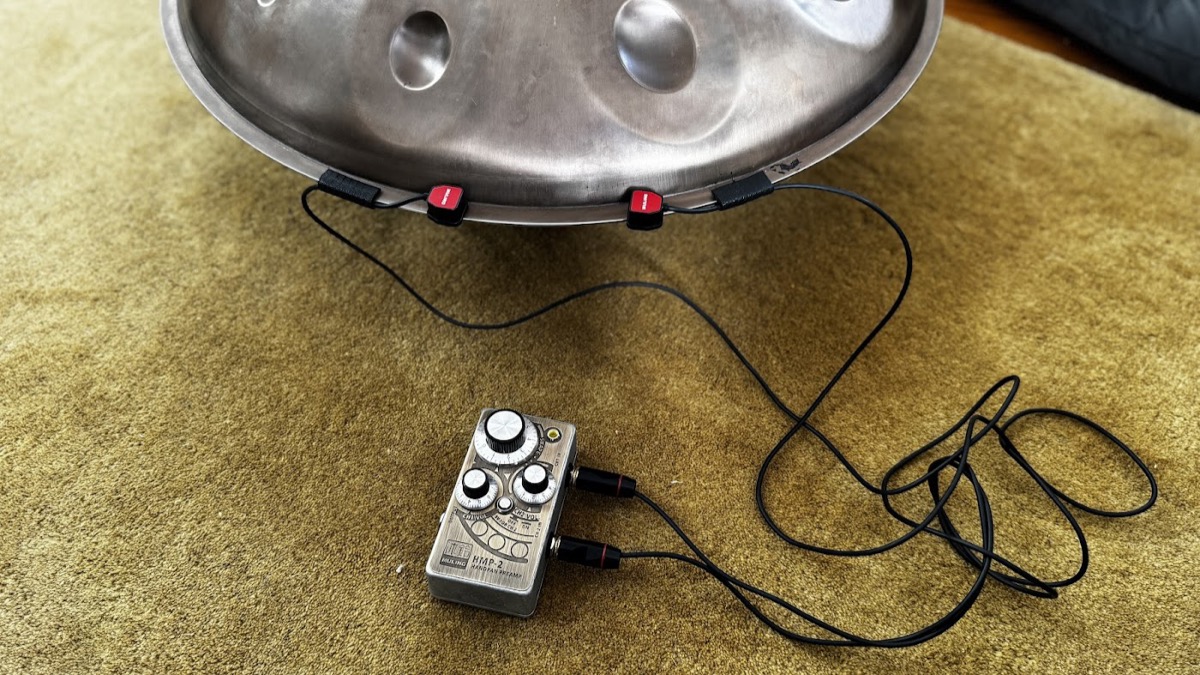
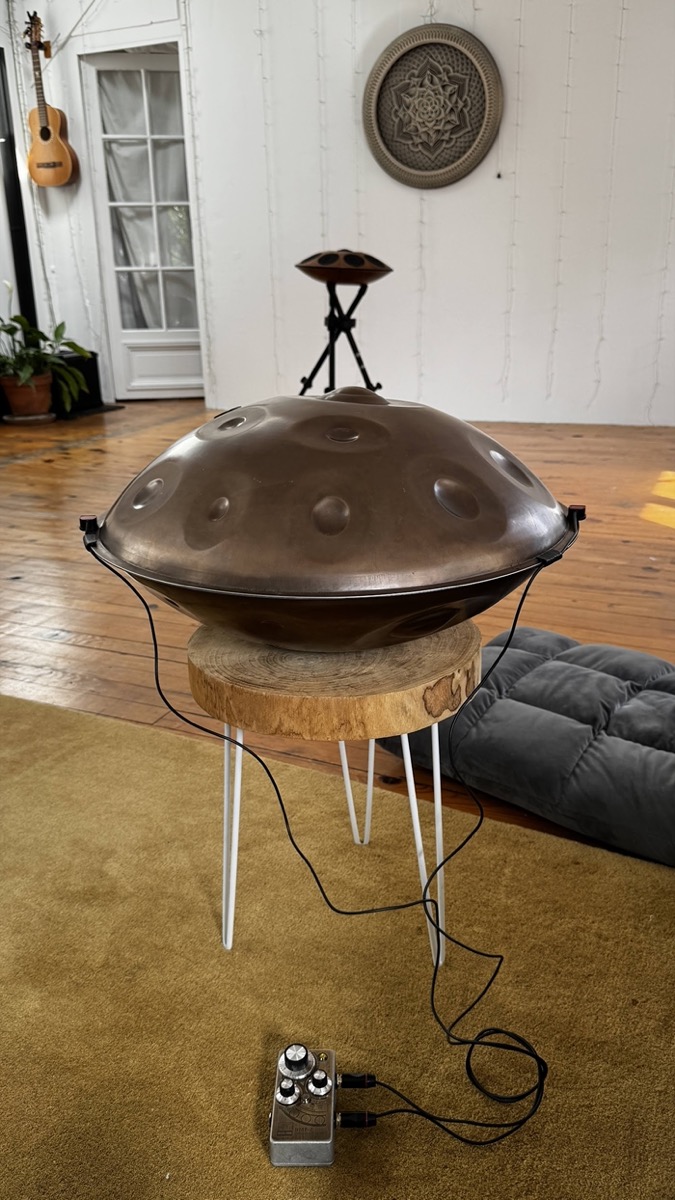
One set covers two handpans: one capsule per instrument, both mixed in the preamp. On a single handpan, you can fit both capsules for a more balanced capture.
The MP-1 capsule in detail
The technical characteristics of the MP-1 contact capsule, as observed in real-world testing.
Boundary condenser microphone
This isn’t an ambient mic: the capsule picks up vibrations in direct contact with the shell. That’s what gives a faithful sound even in a noisy venue.
Magnetic mount
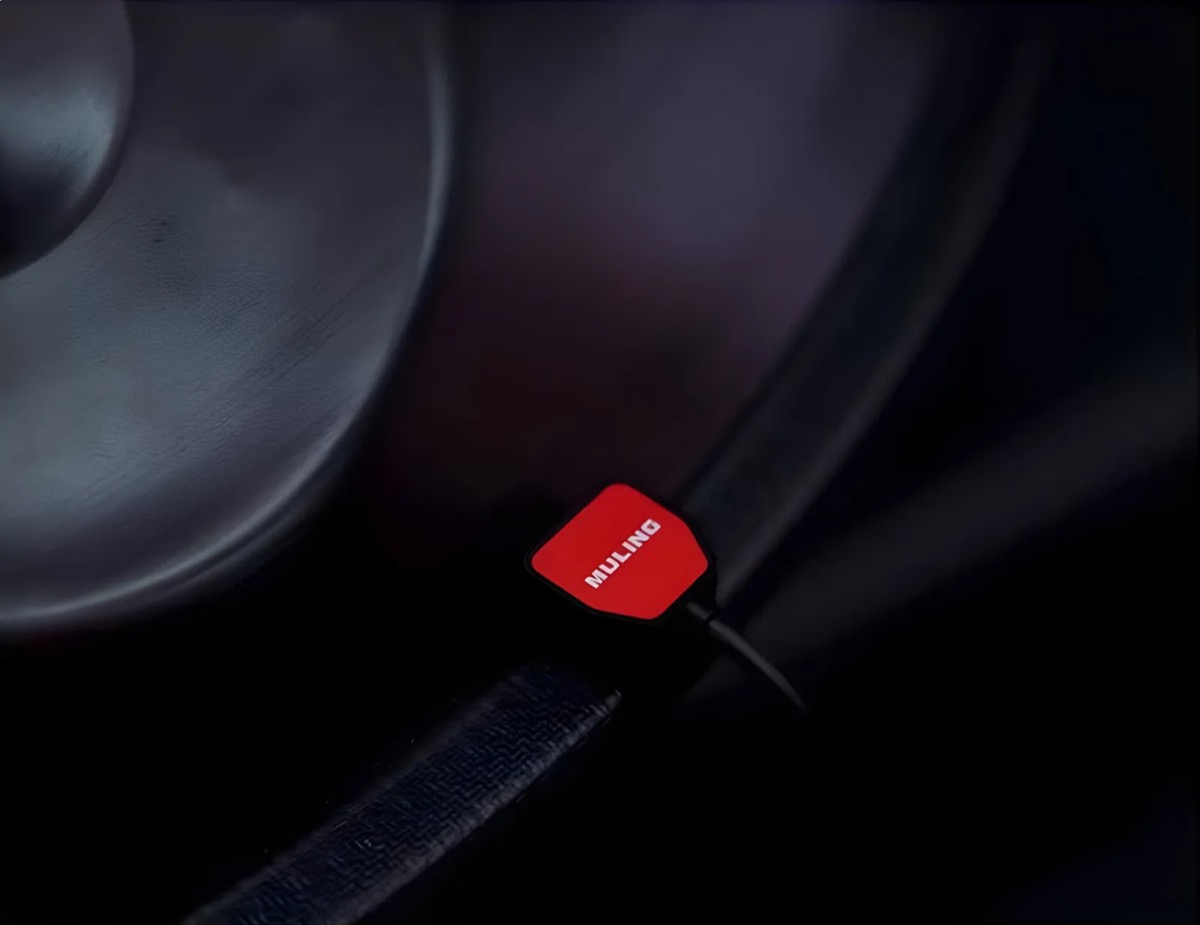
The capsule attaches and detaches magnetically: instant setup, perfectly secure hold on the instrument.
Tiny
The size of a fingertip — you forget it’s there, visually and while playing.
ABS housing with metal hardware
An ABS body reinforced with metal parts: light on the instrument, yet sturdy on the road.
Output impedance: 600 Ω
A standard impedance, perfectly matched to the HMP-2 preamp and to classic line inputs.
Very high isolation
Capture happens by contact: outside noise and other instruments barely get through — invaluable in a jam and on stage.
⚠️ Worth knowing before you buy: the capsules are designed exclusively to work with the Muling preamp. They are not compatible with other brands’ gear — this is a complete system, not a capsule to add to an existing setup.
Technical characteristics provided by the maker, cross-checked with my own use.
The HMP-2 preamp in detail
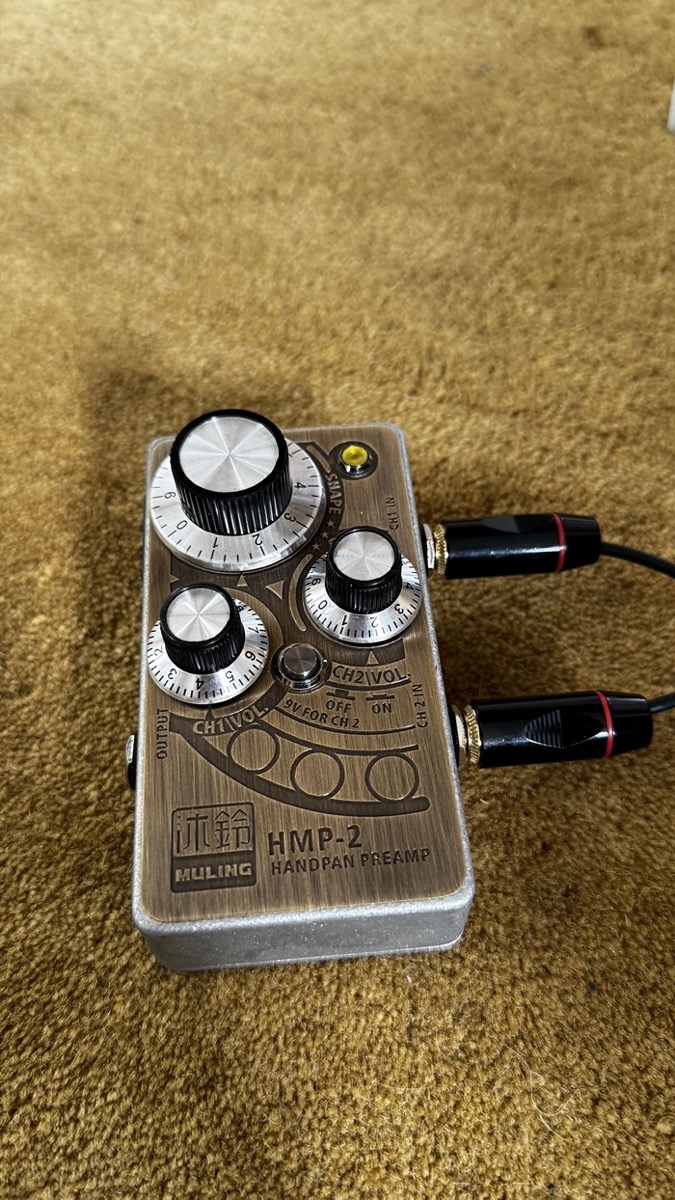
The heart of the system: a two-channel preamp designed specifically for handpan, with built-in tone shaping.
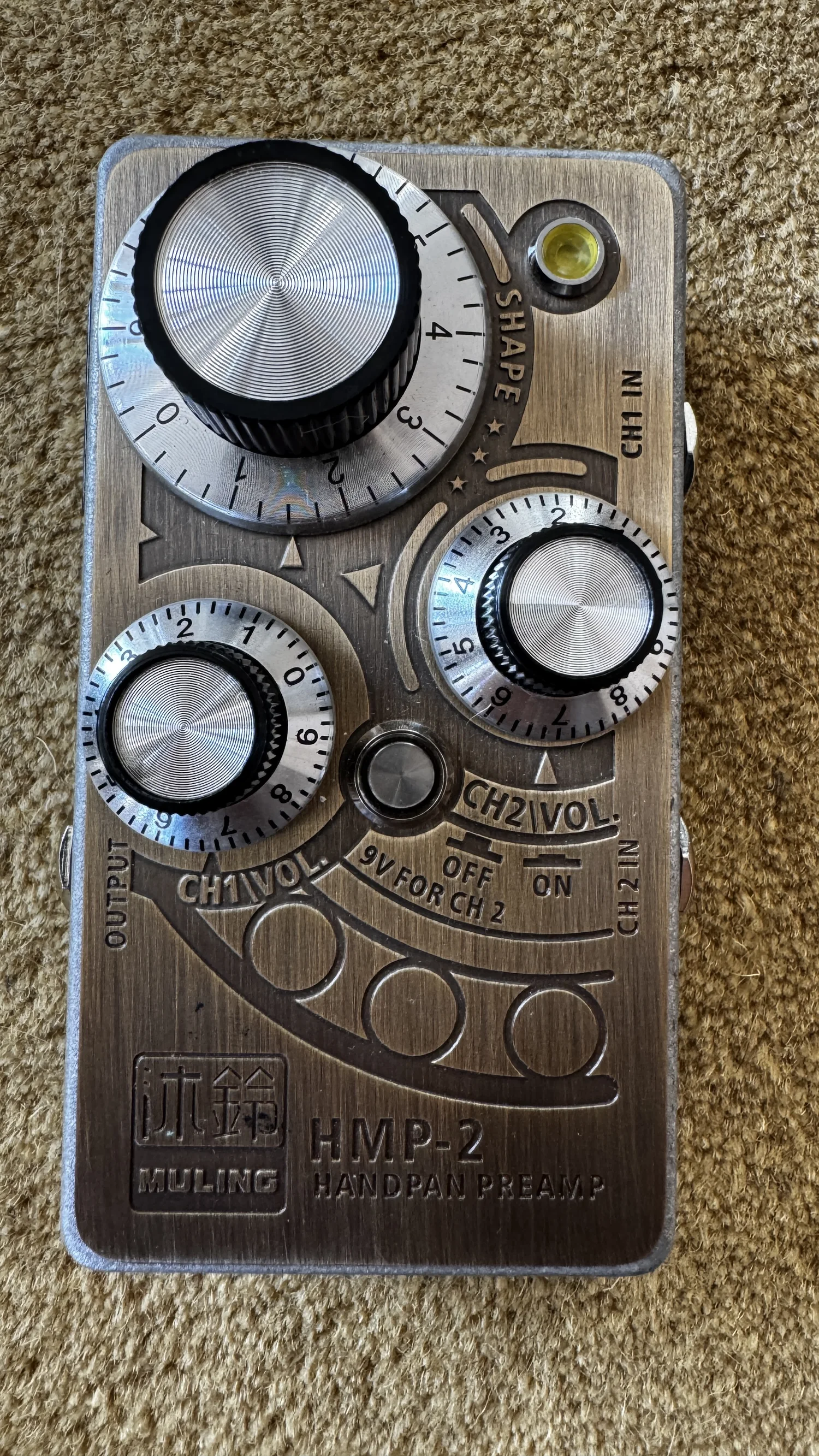
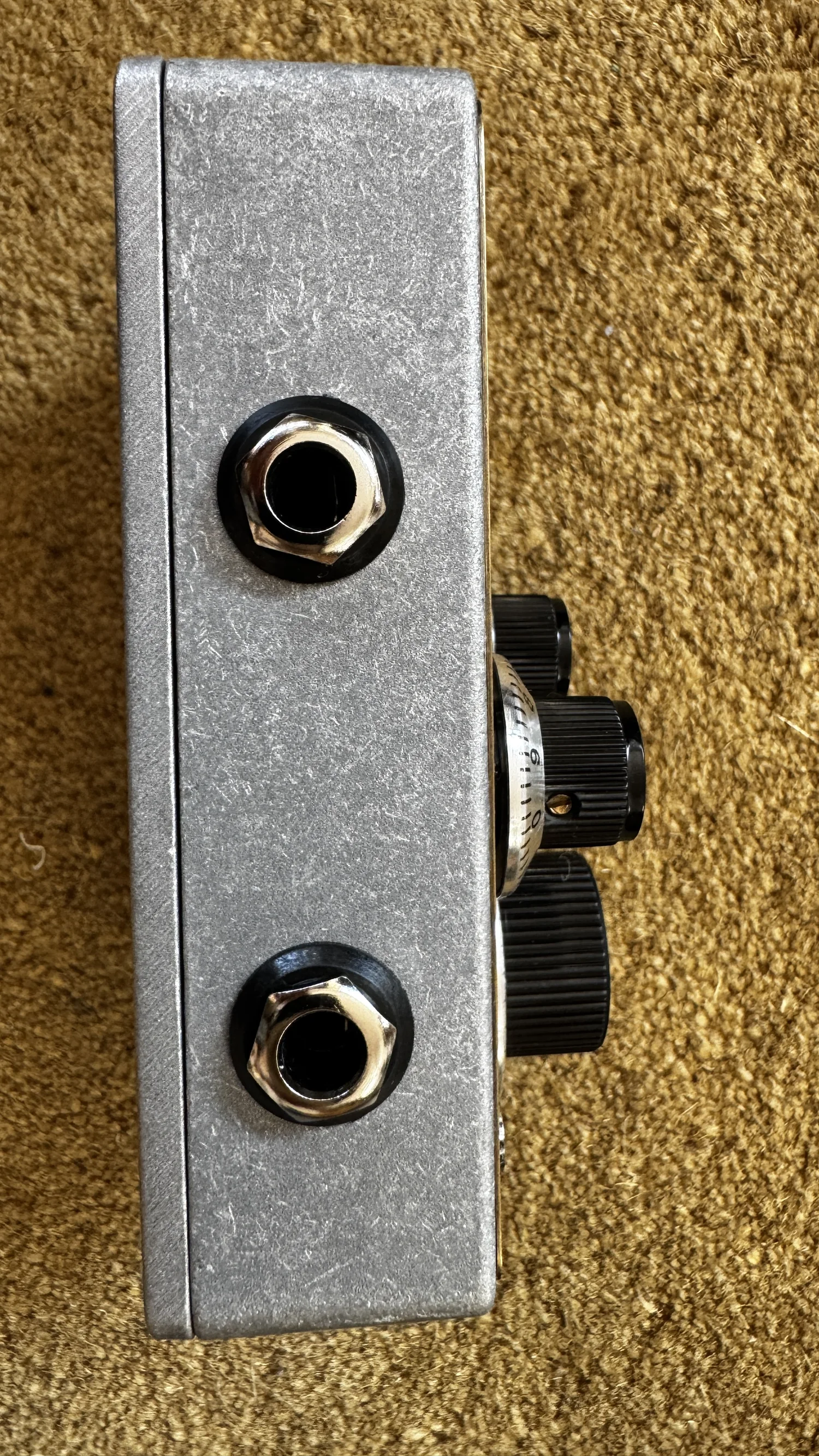
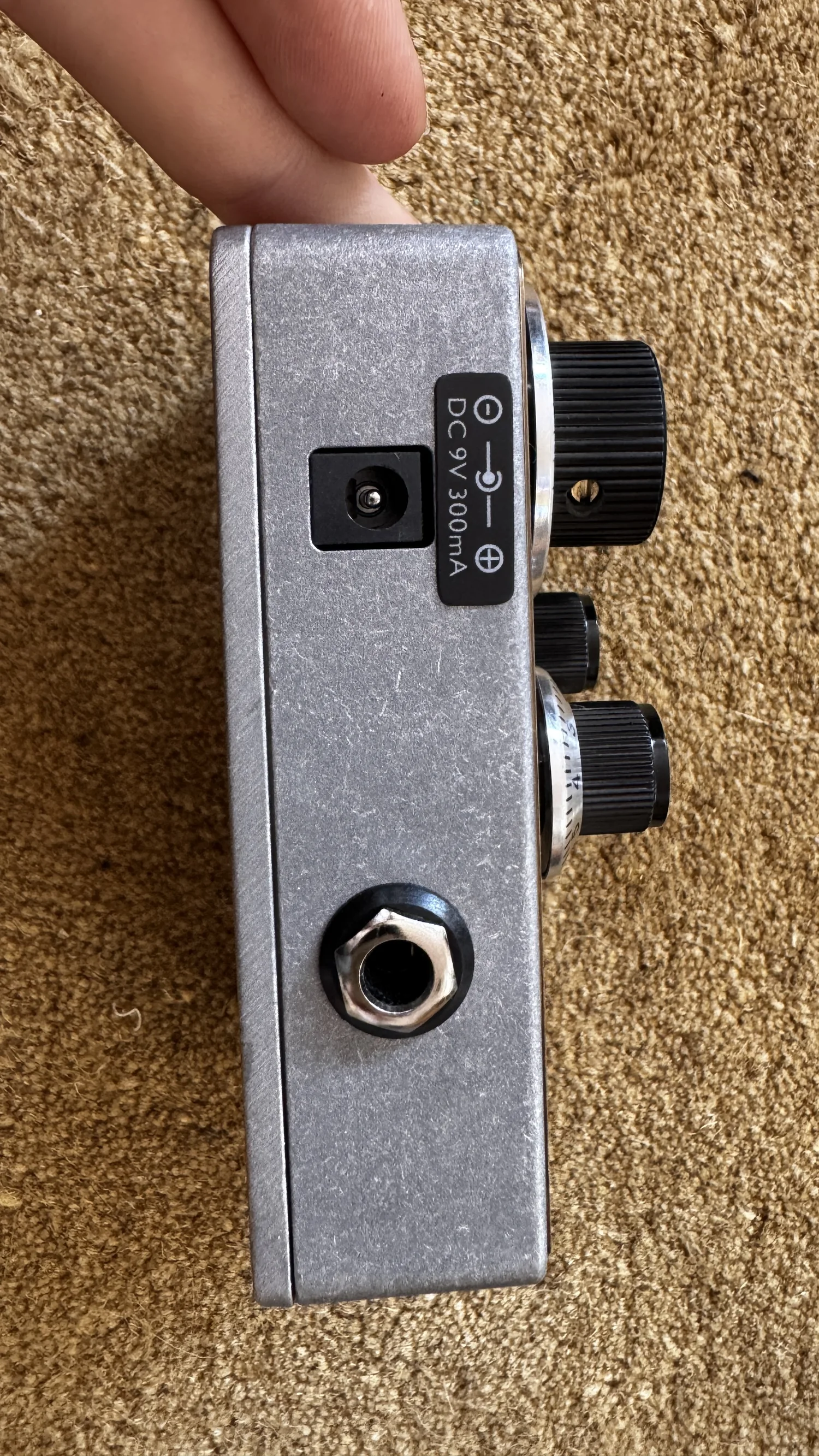
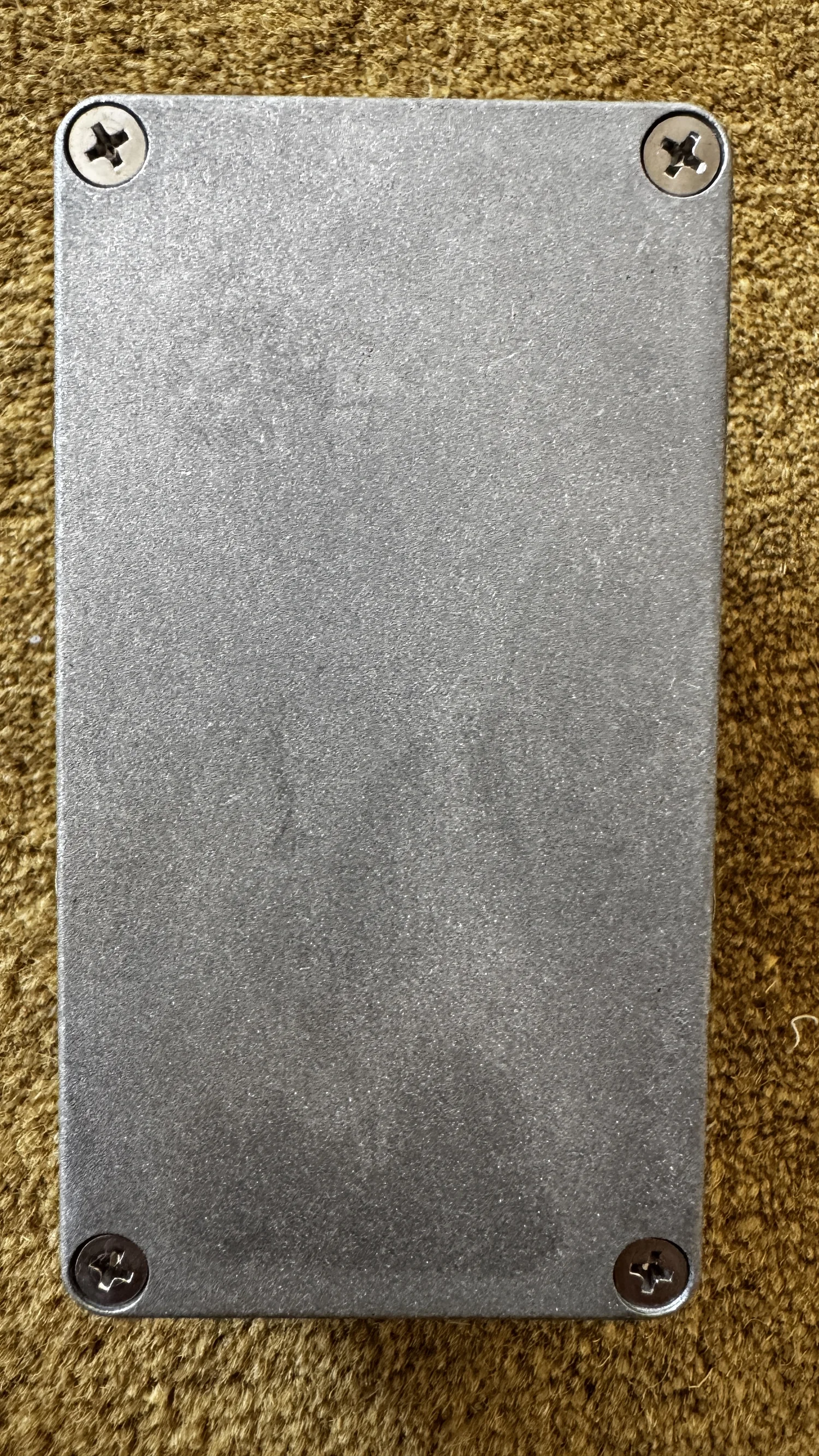
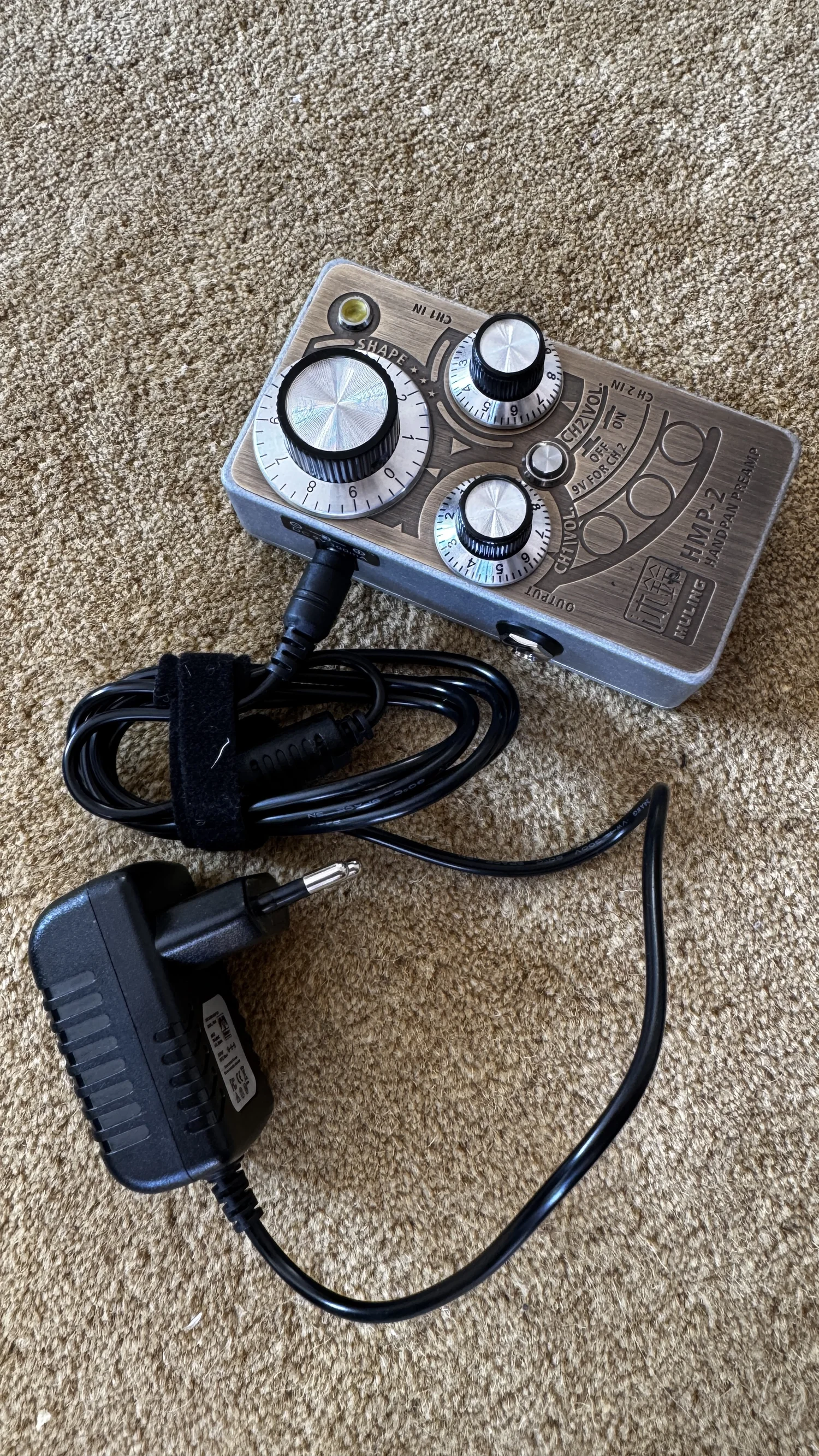
Two independent channels
CH1 and CH2 each have their own volume: you balance your two capsules (or two handpans) precisely before the output.
SHAPE control
The big knob sculpts the sound: at 0 you keep the original tone; turning clockwise boosts lows and highs while reducing mids — perfect to cut through a busy mix.
Mixed 6.35 mm jack output
A single cable runs to your speaker, mixer or audio interface.
CH2 switch
Channel 2 accepts an active capsule (switch ON) or a passive H1-type pickup (OFF). Channel 1 is reserved for active capsules.
Power indicator
An LED confirms at a glance that the preamp is powered.
Metal chassis
A compact, sturdy enclosure the size of an effects pedal — it takes stage and road abuse.
About 20 h of battery life
With a simple 9 V battery you get around twenty hours of playing: enough for several gigs without a second thought.
Impedances: 1 MΩ in, 600 Ω out
A high-impedance input that preserves the full richness of the capsules’ signal, and a standard output that plugs in anywhere — speaker, mixer or audio interface.
Every control explained
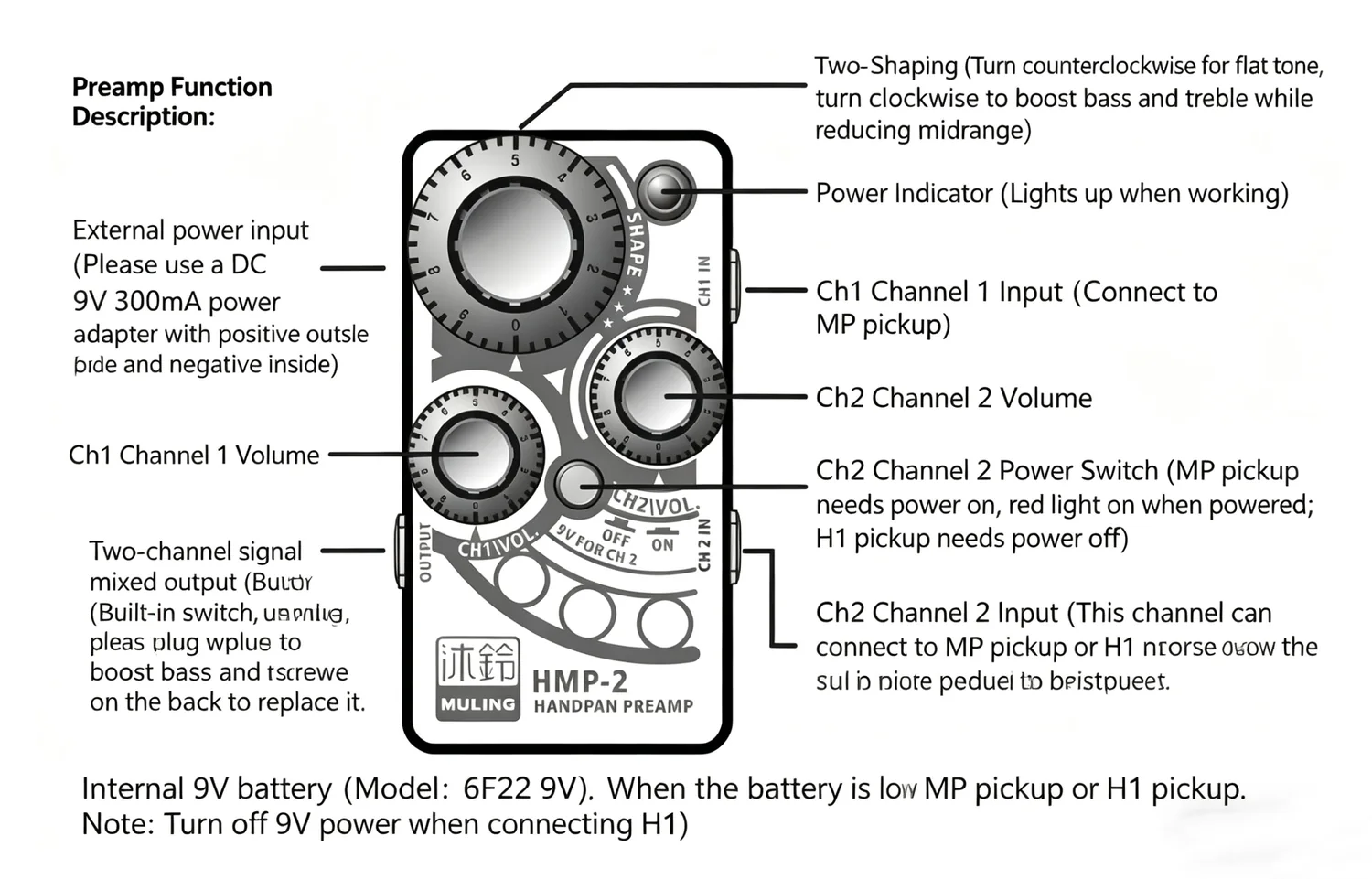
Two important precautions
- • Never plug a passive pickup into channel 1: this channel permanently supplies power and it would damage your gear.
- • On channel 2, switch the power OFF if you plug in a passive H1 pickup.
Power: battery or mains
The preamp runs two ways — pick the one that fits your context.
On a 9 V battery — total autonomy
A 9 V battery (6F22 type) sits inside the enclosure. Just open the base with the included screwdriver. This is the nomad solution par excellence: no power cable, you play anywhere. I personally use a rechargeable battery, cheaper and greener. Remember to remove it if you won’t use the preamp for a long time.
On mains — for long sessions
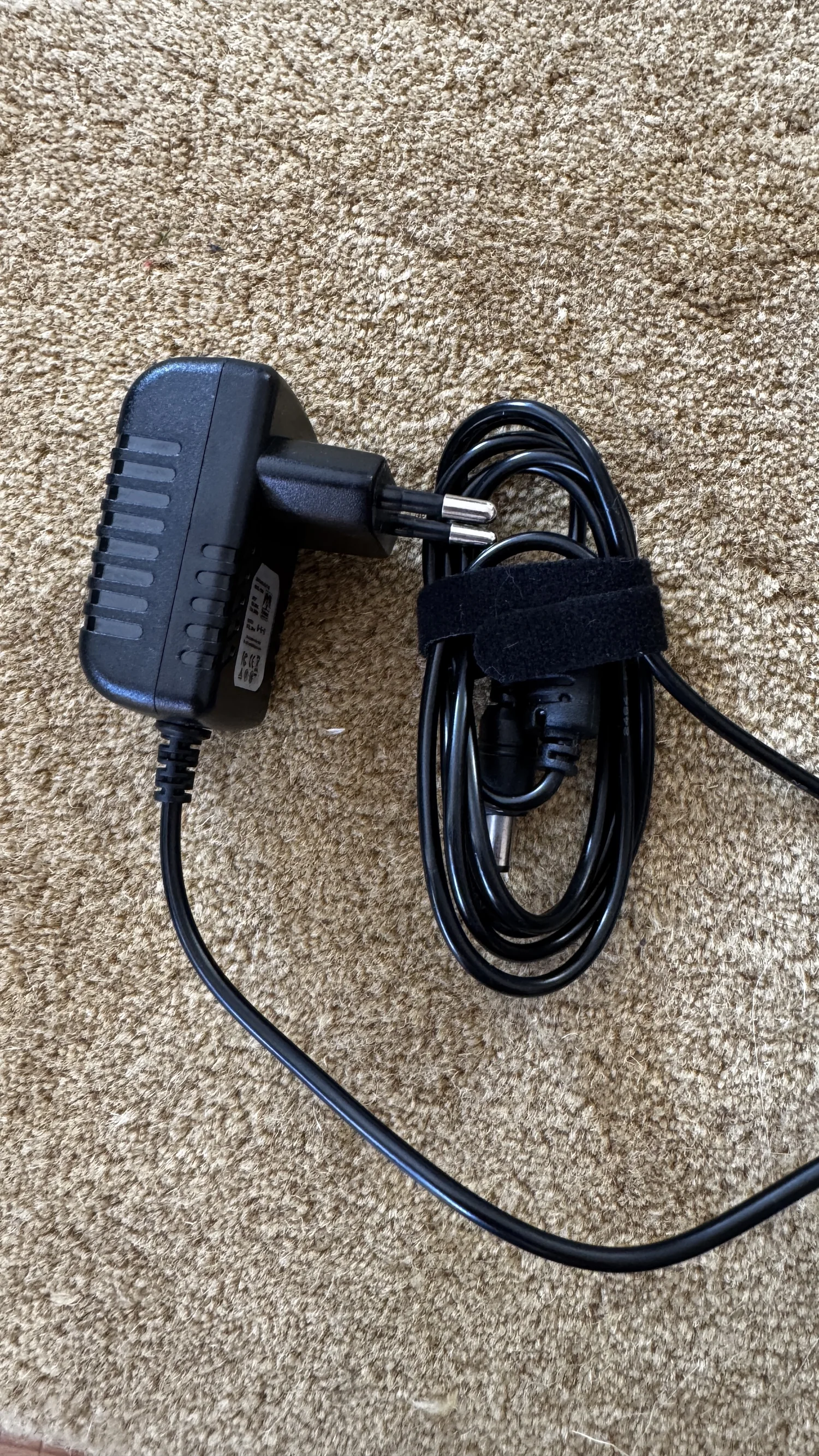
The preamp also takes a 9 V 300 mA mains adapter, on a 5.5 × 2.1 mm DC socket with centre-negative polarity. Ideal in the studio, in rehearsal or for a long concert where you don’t want to depend on a battery.
⚠️ Important: the mains adapter is not included with the set. You need to buy it separately — check the specs carefully (9 V, 300 mA minimum, centre-negative polarity) so you don’t damage the preamp.
The maker’s manual
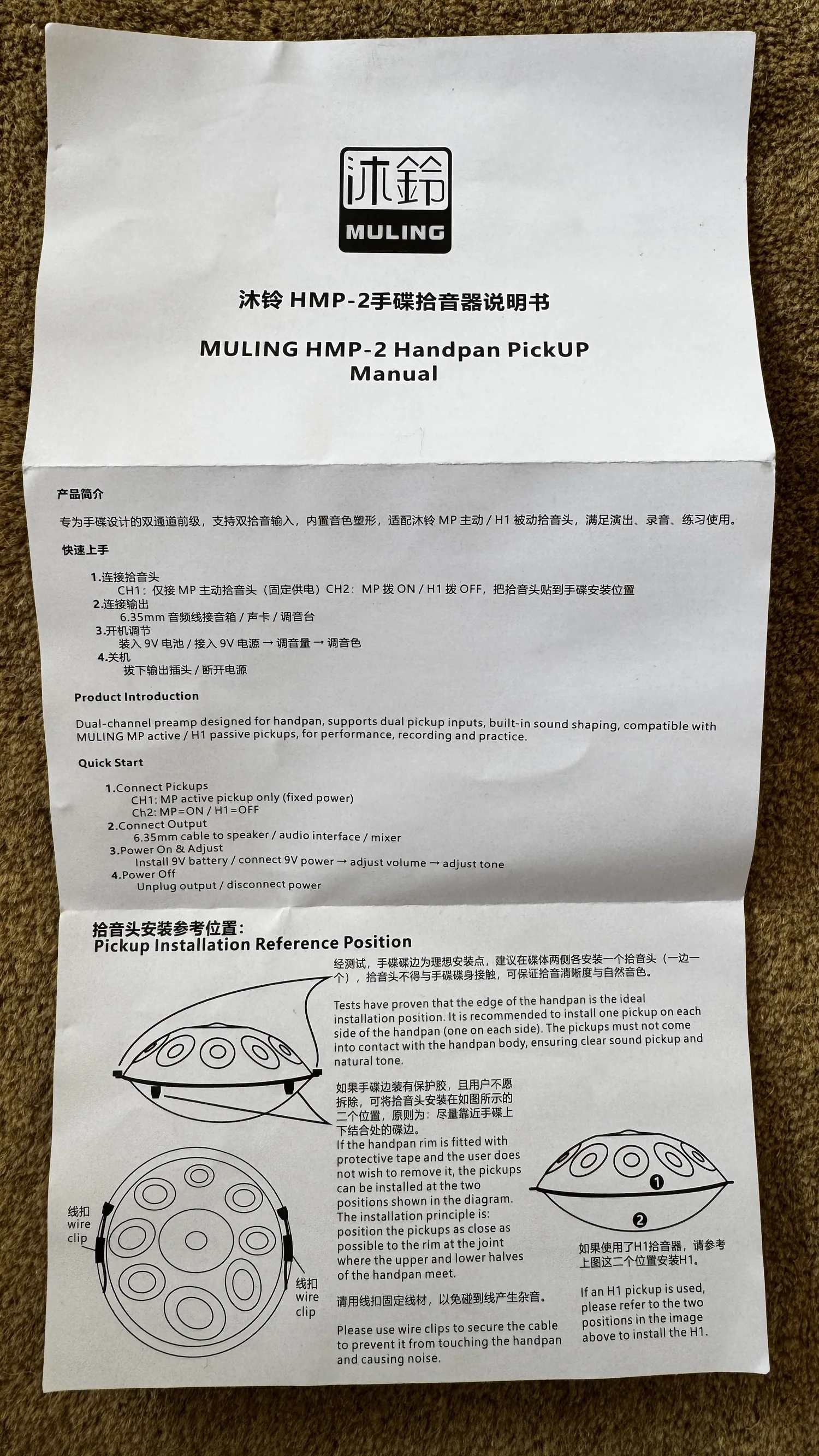
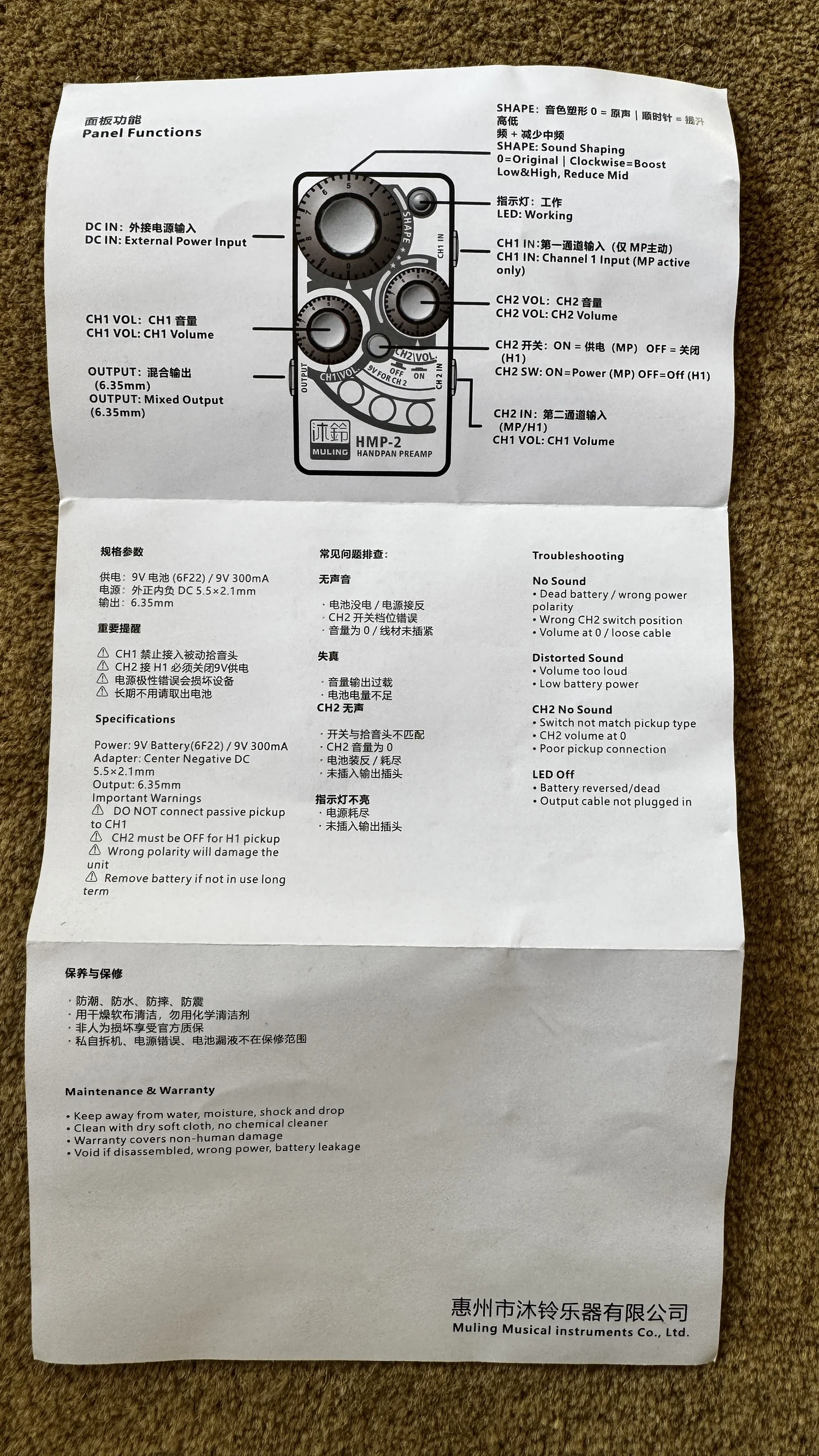
Both pages of the included manual, with the recommended capsule placement positions and the technical specifications.
Price and ordering
Price announced by the maker in dollars; the euro conversion is indicative and depends on the day’s rate. Shipping and any customs fees on top.
How to order
The maker doesn’t offer online payment for France yet: orders go through me. Write to me, I’ll put you in touch and support you until your mic arrives.
⚙️ The ordering procedure is being finalised with the maker. In the meantime, write to me: I answer personally and I’ll keep you posted as soon as everything is settled.
What if you play an electronic handpan?
The Neotone needs no microphone: it plugs straight in with a jack. If you’re hesitating between acoustic and electronic, my comparison will help you choose.