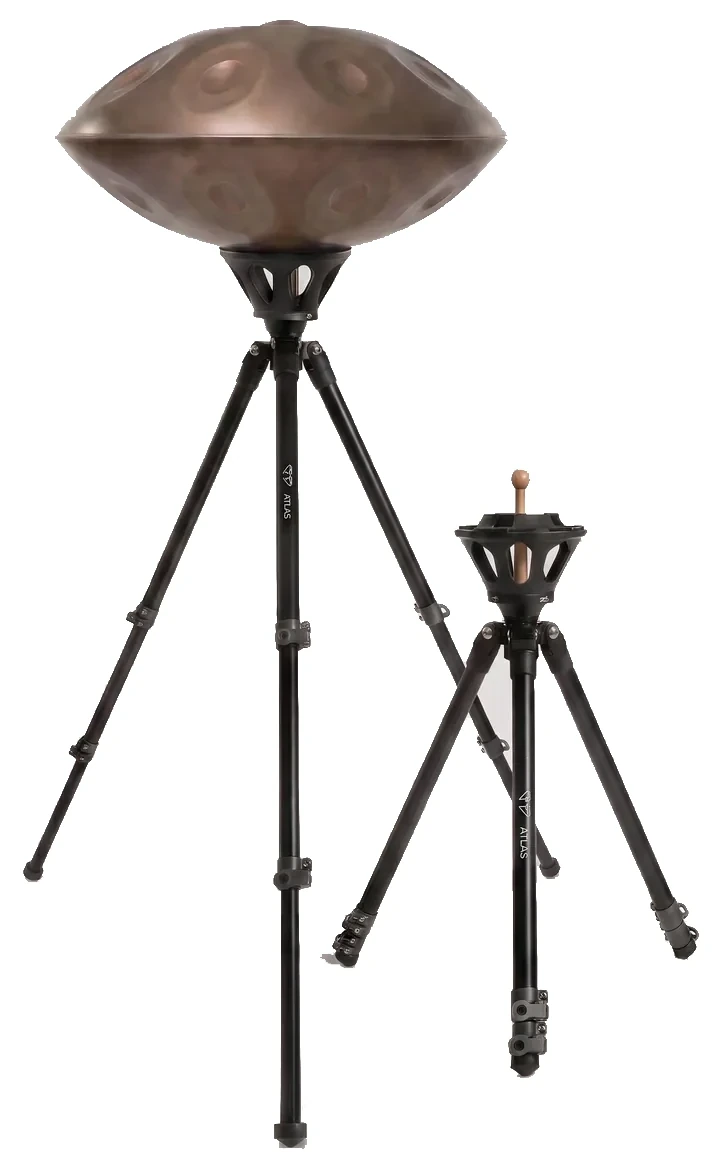
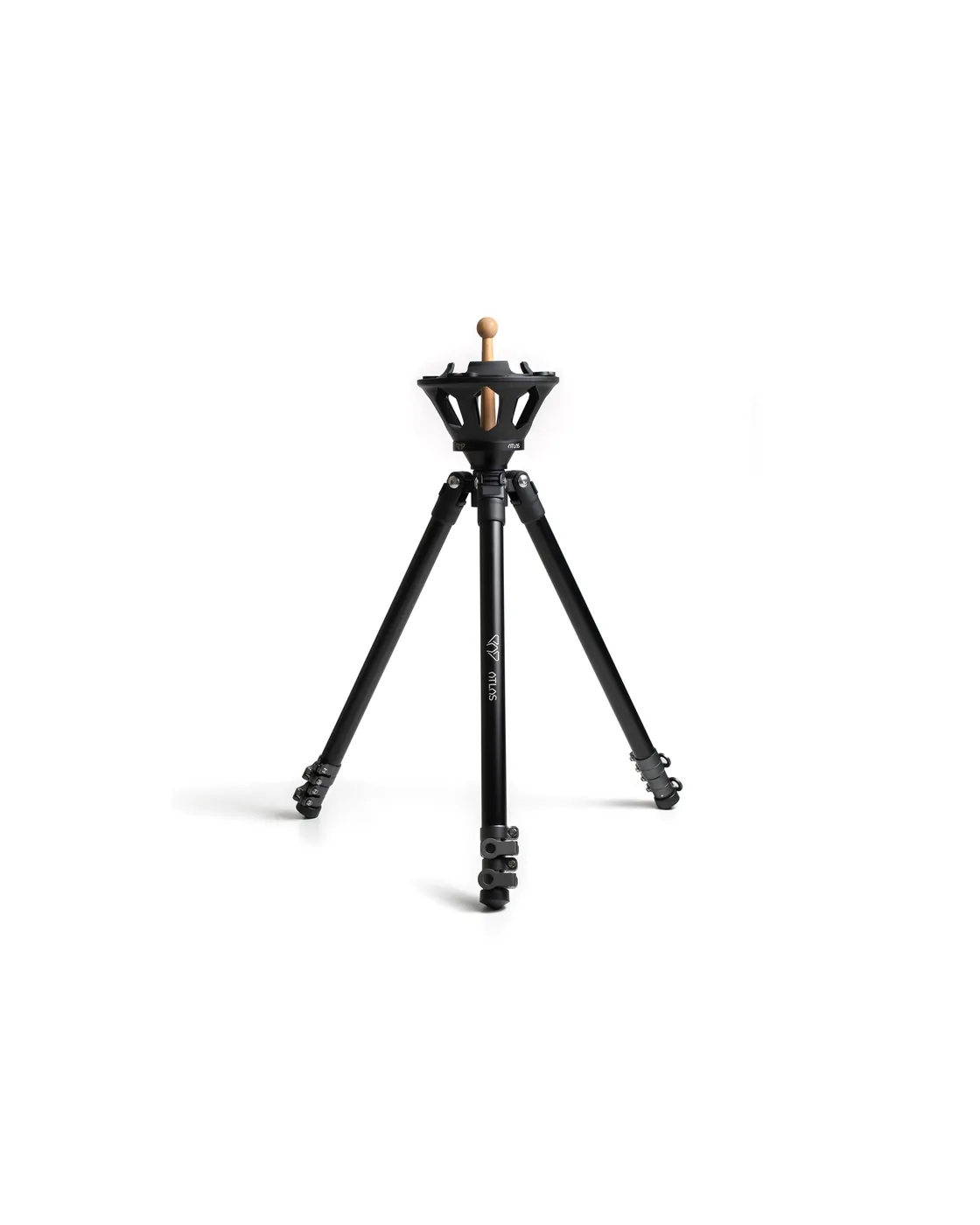
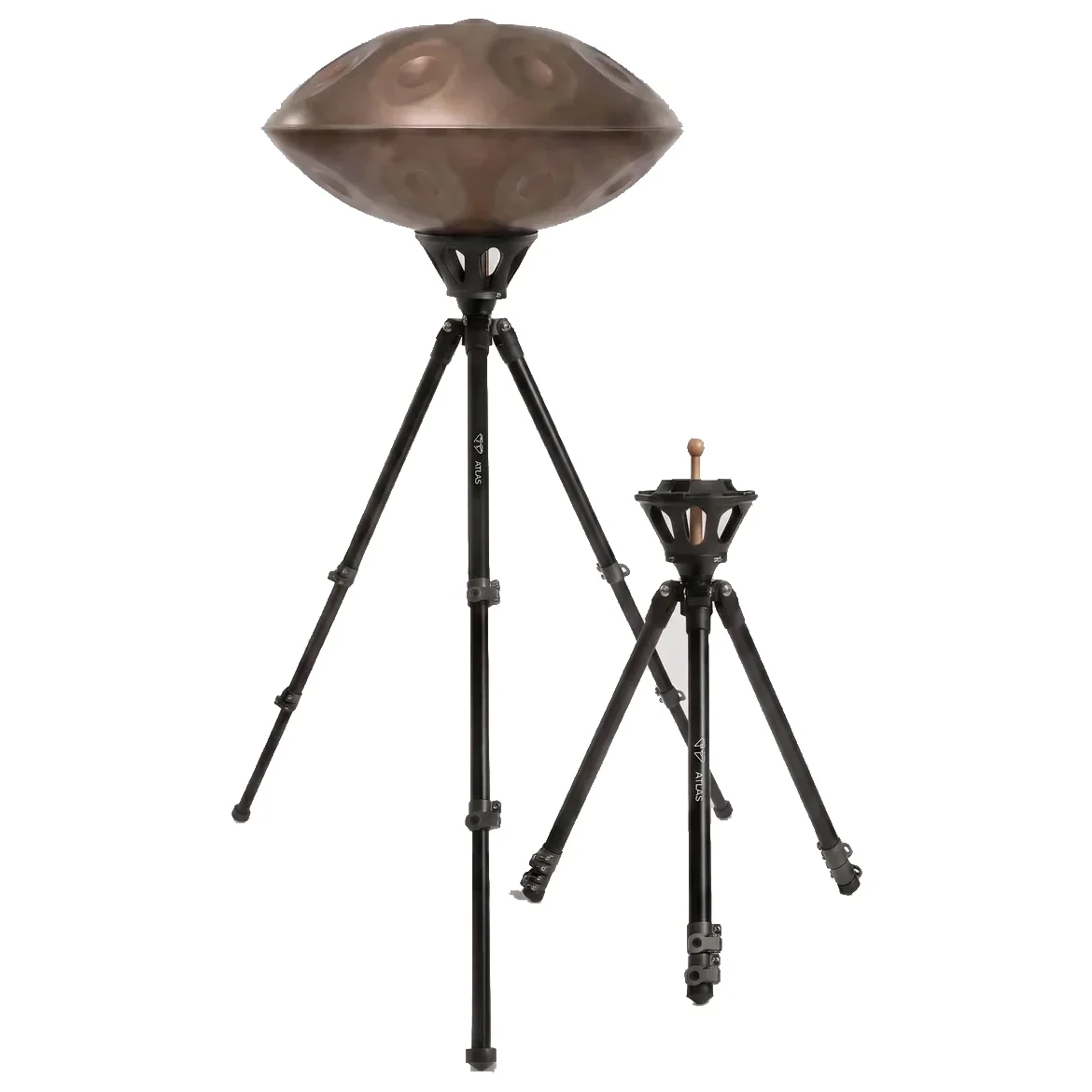
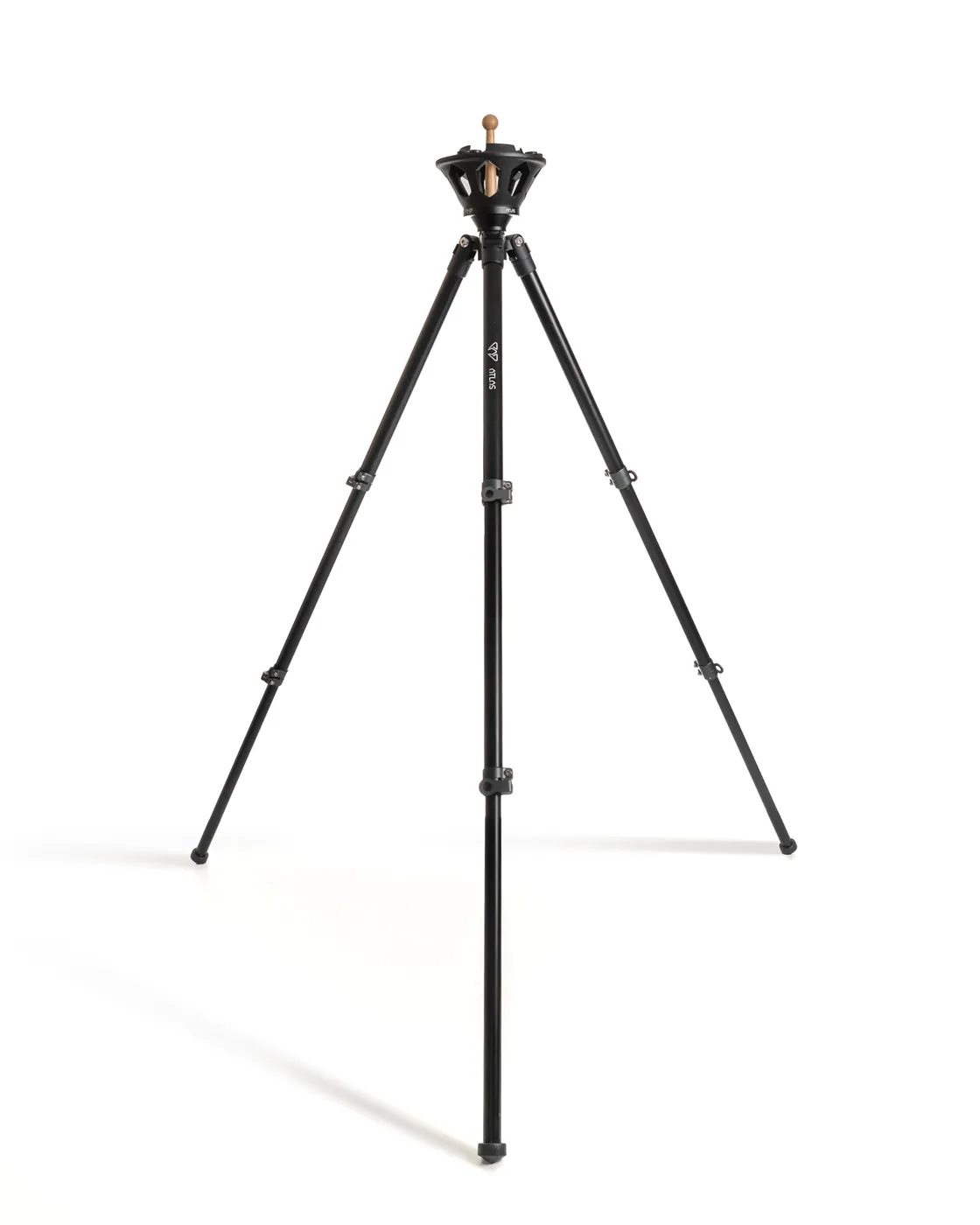
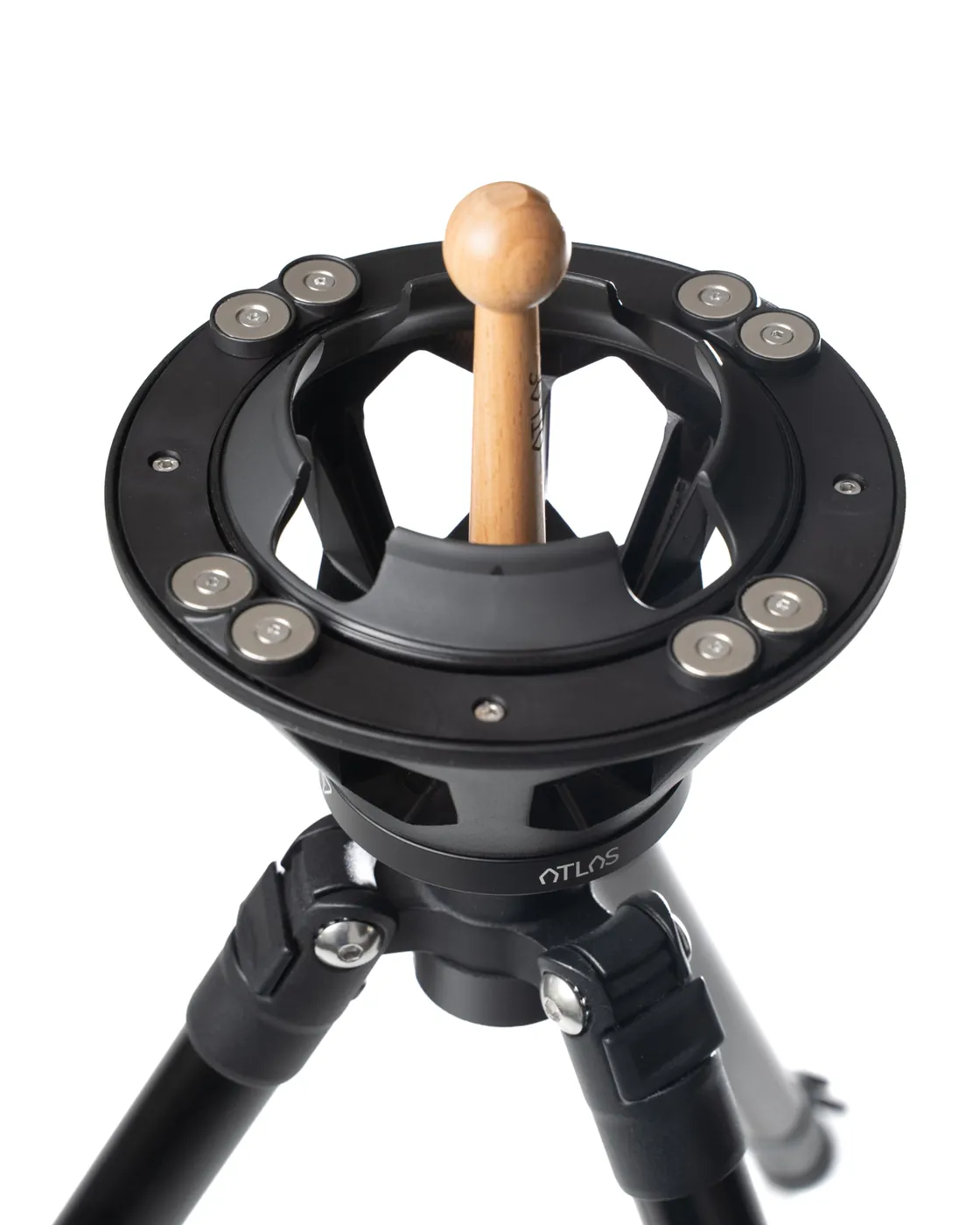
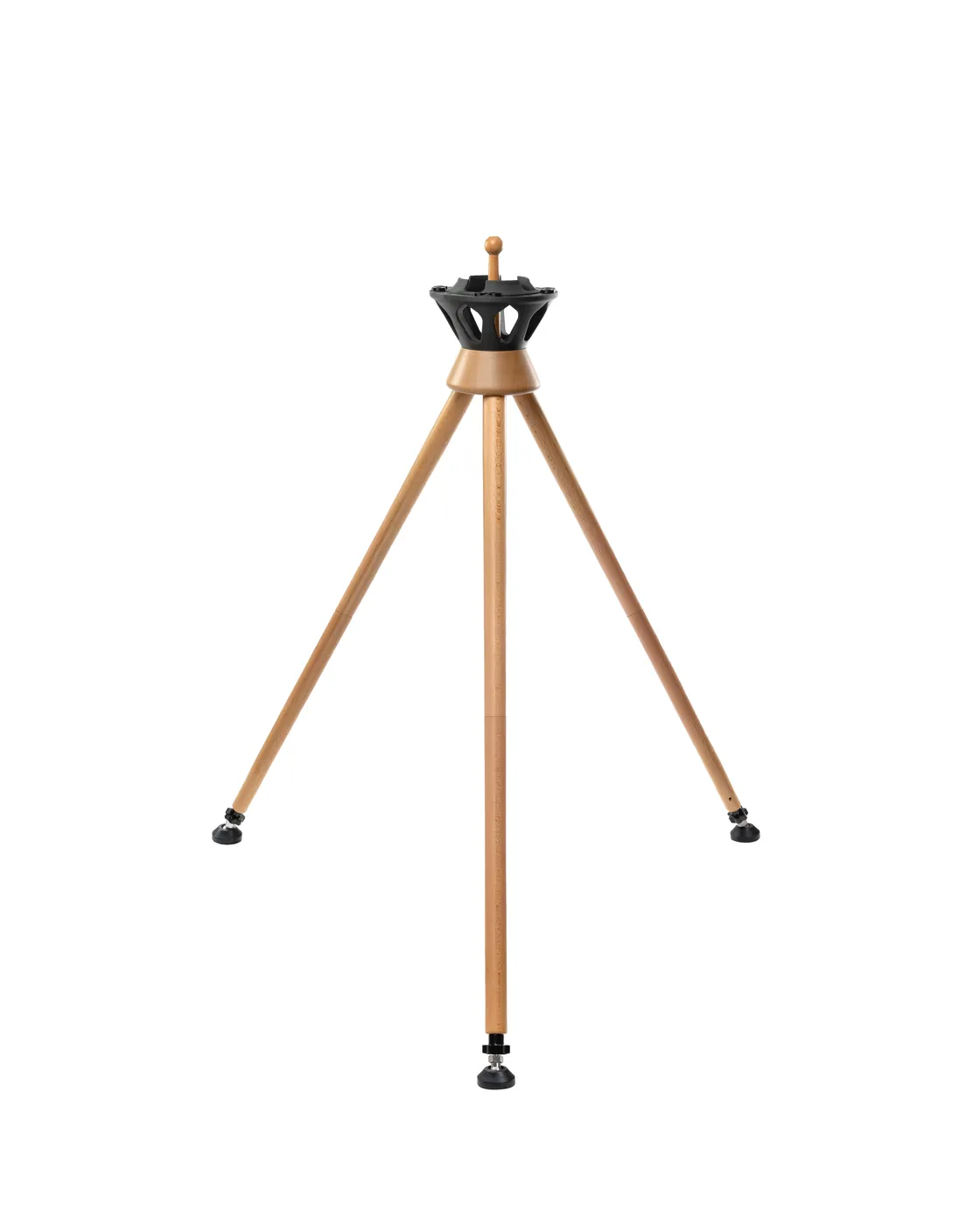
Atlas builds handpan tripods in Italy. The instrument is neither screwed down nor strapped in: it rests on a floating disc held by magnets. I am a partner of the brand, and both models are now at the showroom — the Atlas Pro and the Atlas All.
The button copies the code, then opens the Atlas website in a new tab.
Valid on all Atlas products, Atlas Body included. Enter it at checkout, on the Atlas website. Both models are at the showroom, in Paris 20ᵉ, alongside the handpans. You put an instrument on one, set the height, play — and you know.
The video demonstration
Why play the handpan standing up — my video, with Atlas
My own video, published on my YouTube channel.
« I have invested in every handpan stand, or almost every handpan stand, and I am going to explain to you why today I take my stand with Atlas. »
Ever since I started playing the handpan, I have played standing. First because I am a singer, and for me that is the best position to sing freely. Then because I am a multi-instrumentalist: I have an electronic kick pedal at my foot and several instruments around me. And because it is by far the most balancing posture for the body. A handpan stand is not an accessory in my line of work: it is what makes my way of playing possible.
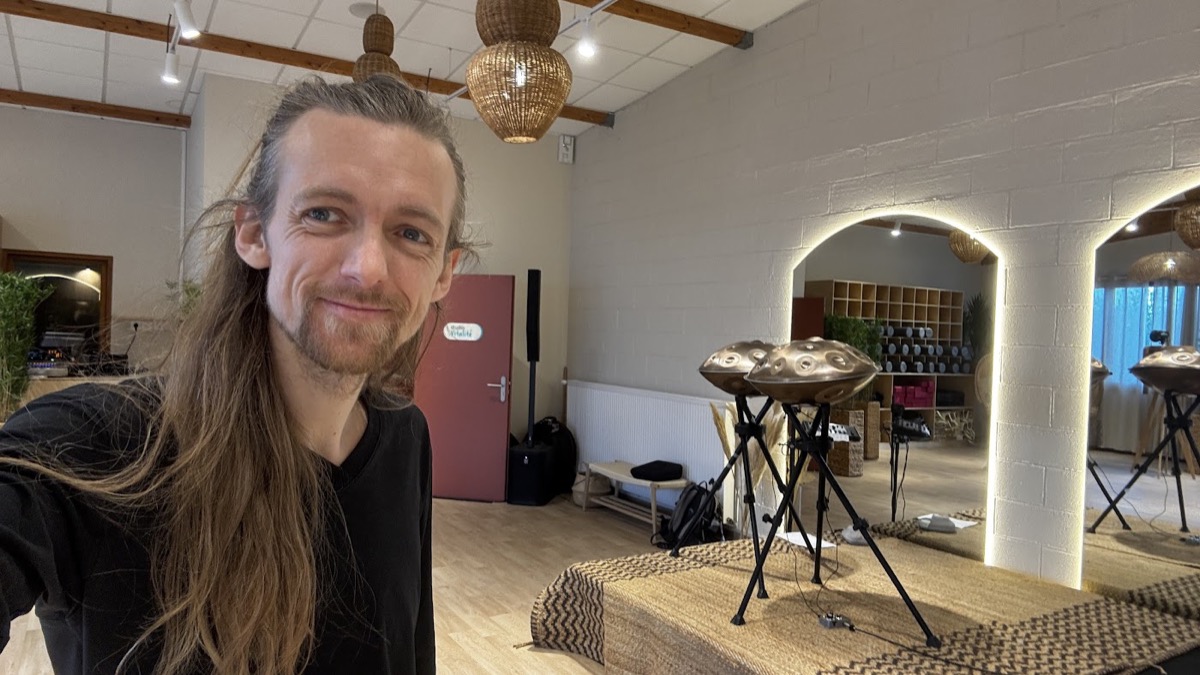
Same thing at the showroom: my two Yishama acoustic handpans stay mounted on their stands, at playing height, ready to be played. A handpan stand isn’t an accessory you get out for concerts — it’s what the instrument lives on.
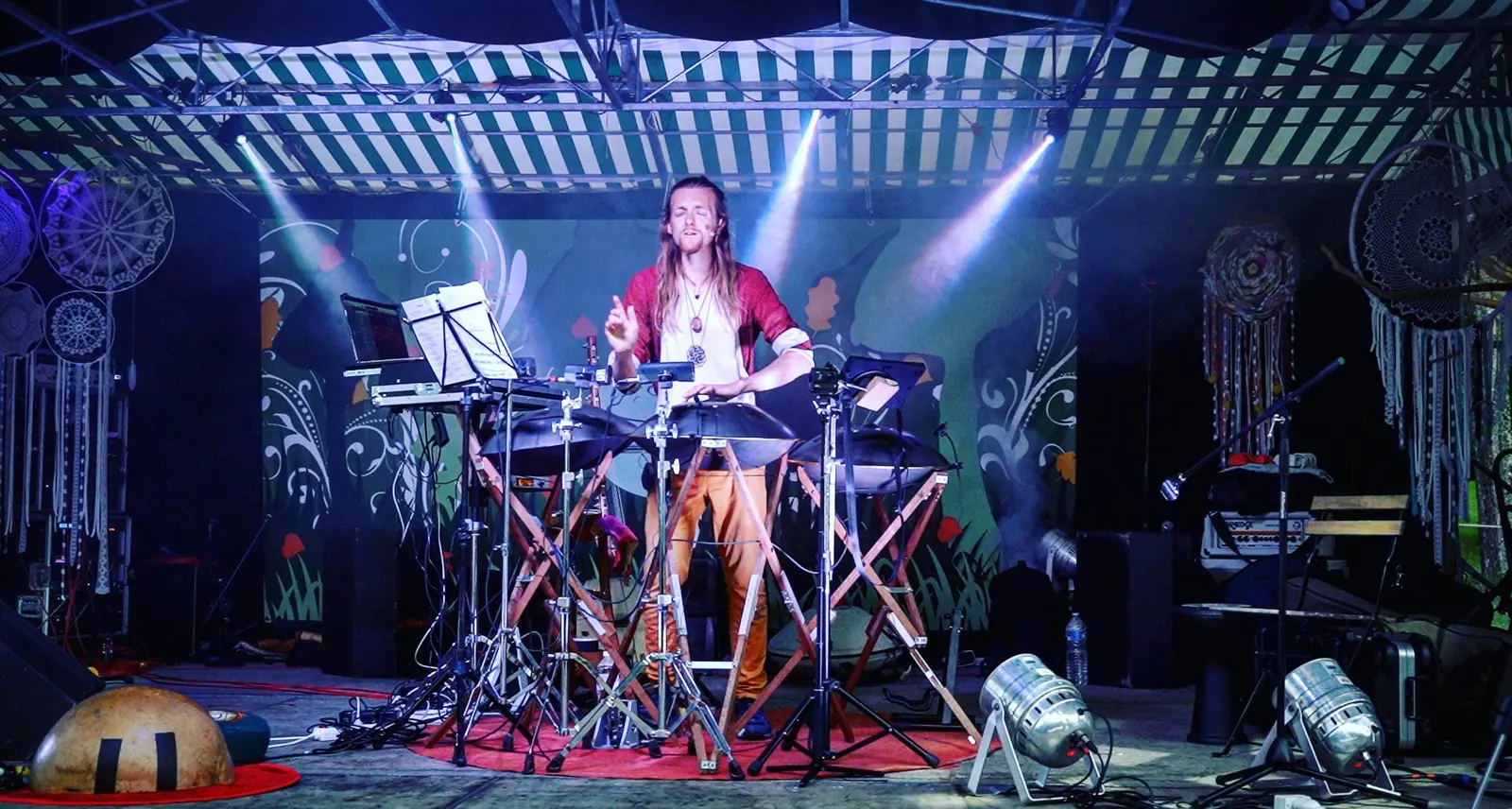
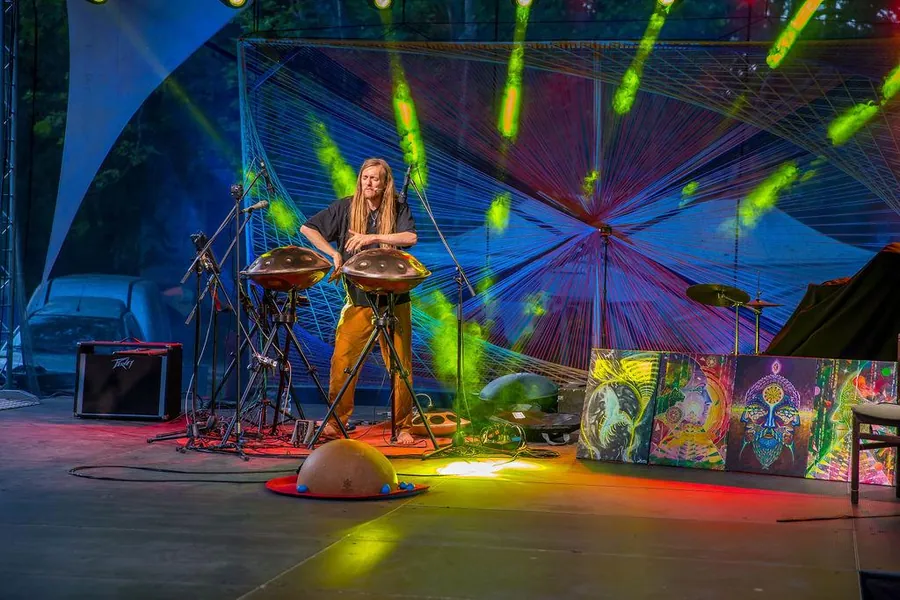
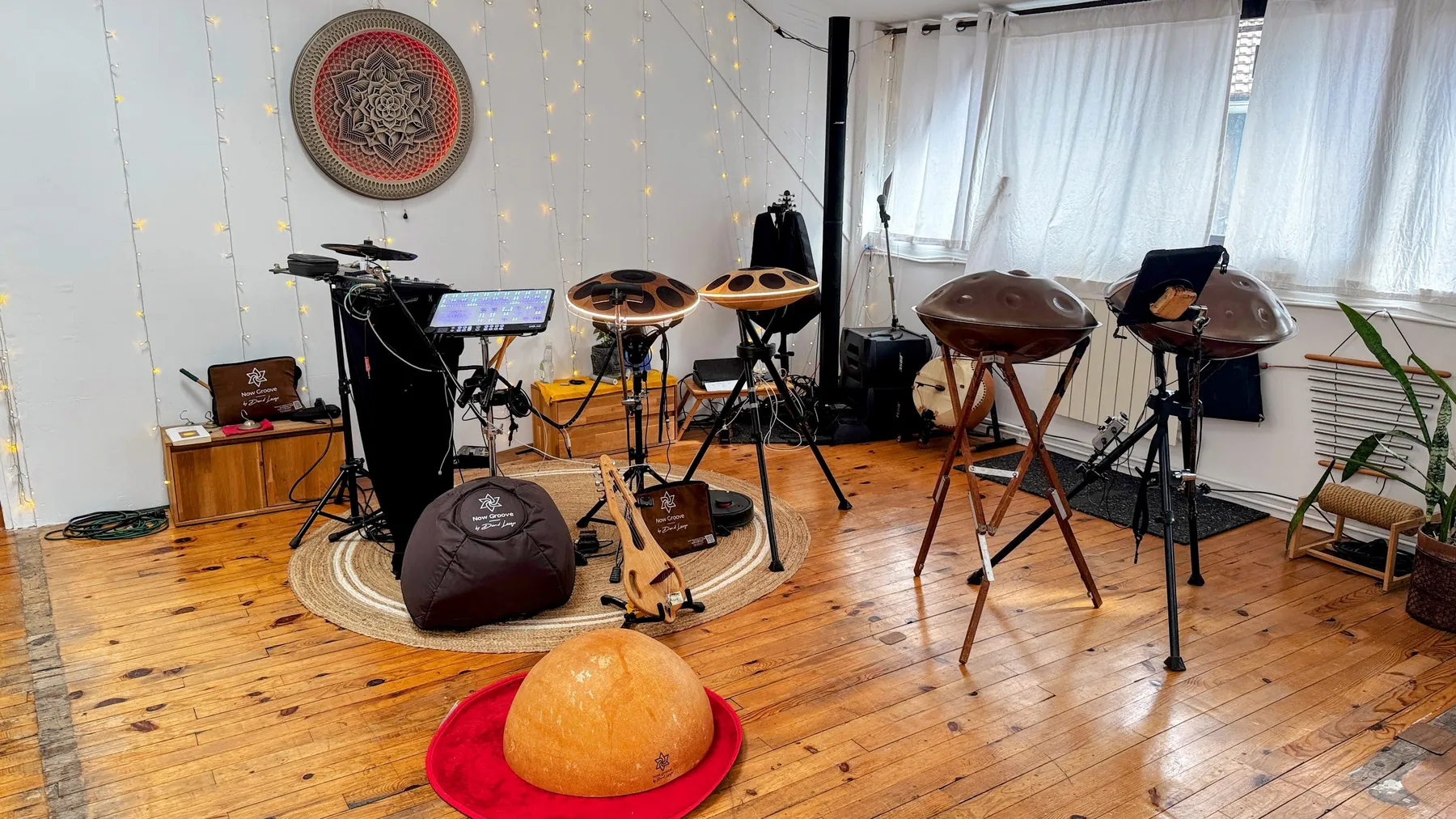
Two handpans, a kick pedal, an N’Goni, a calabash — and I sing
That is the setup I take on stage, and the one I used for my blind audition on The Voice. Everything stands, everything is within reach, and none of it holds together if the instruments are not at the right height. It is very concrete: a few centimetres too high and my singing goes off, a few too low and I can no longer reach my bass notes.
I have tried several, and I ended up wearing them out for good. I am talking about MY units and MY use — the stage, the travelling, several dozen dates a year:
Everness Festival, Hungary: standing behind my two Yishama acoustic handpans — on the stands I was using then.
Jacomina Kistemaker
I own two of her models. She is a maker I respect, and her stands served me for a long time.
Meinl
Mine is solid, genuinely so. But it is too heavy for me to carry around: when I leave to play, that is the criterion that decides everything.
S Pan
It has been my choice until today, and it has real qualities: light, easy to carry. On mine, it was the sliding systems and the 3D-printed parts that eventually gave up — one of them broke over time. I also wondered whether the suction-cup principle absorbed part of the vibration: that is a question I ask myself, not a measurement I made.
The solution
Why Atlas, now
Given everything I have tried, this is the first design that answers every single problem I have run into: a magnetic mount instead of a suction cup, an Atlas Pro made entirely of aluminium — telescopic legs included — and 1.8 kg that go away in their bag. I am convinced. Both stands arrived on 26 August 2026, and I have tried them.
What Atlas does differently
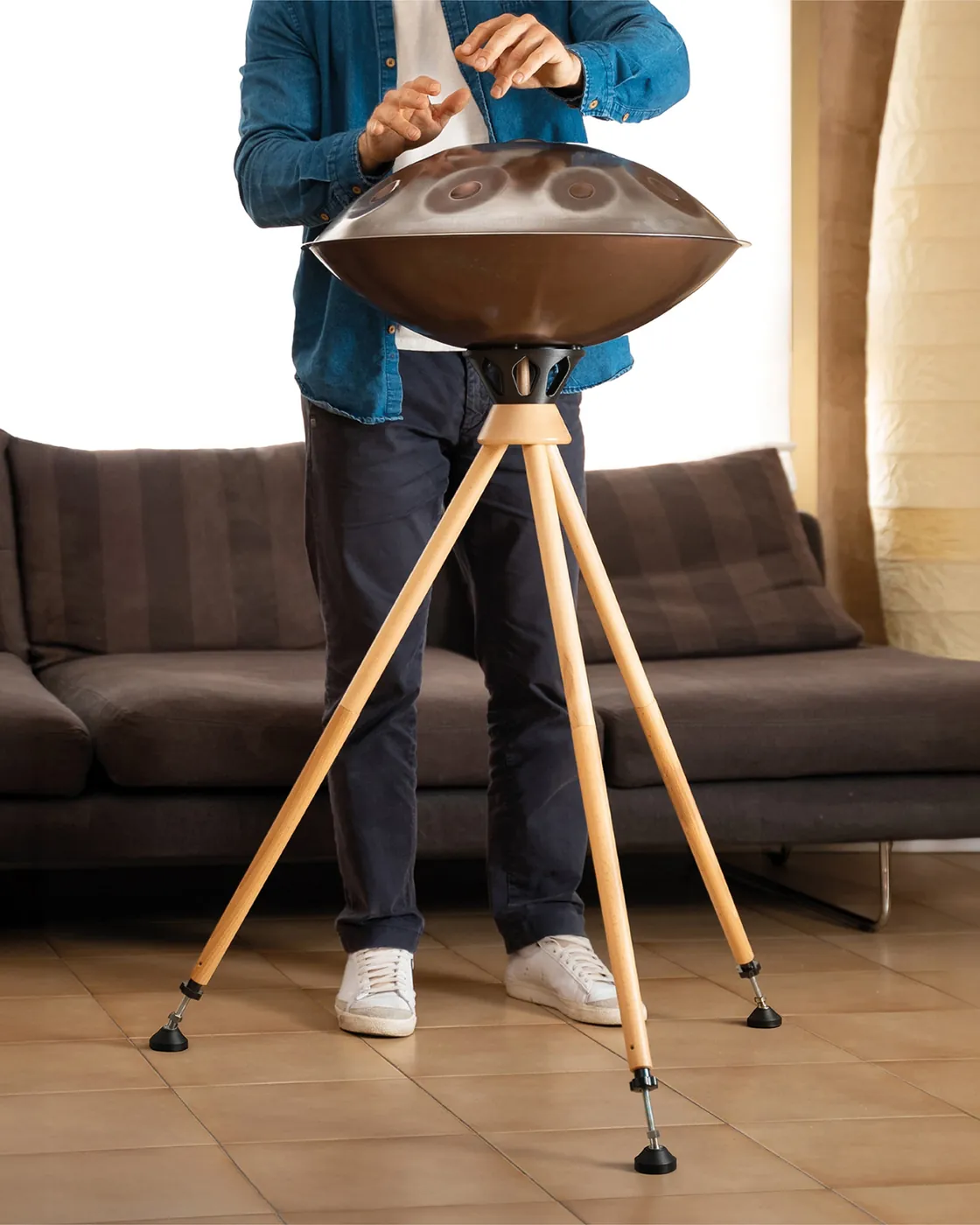
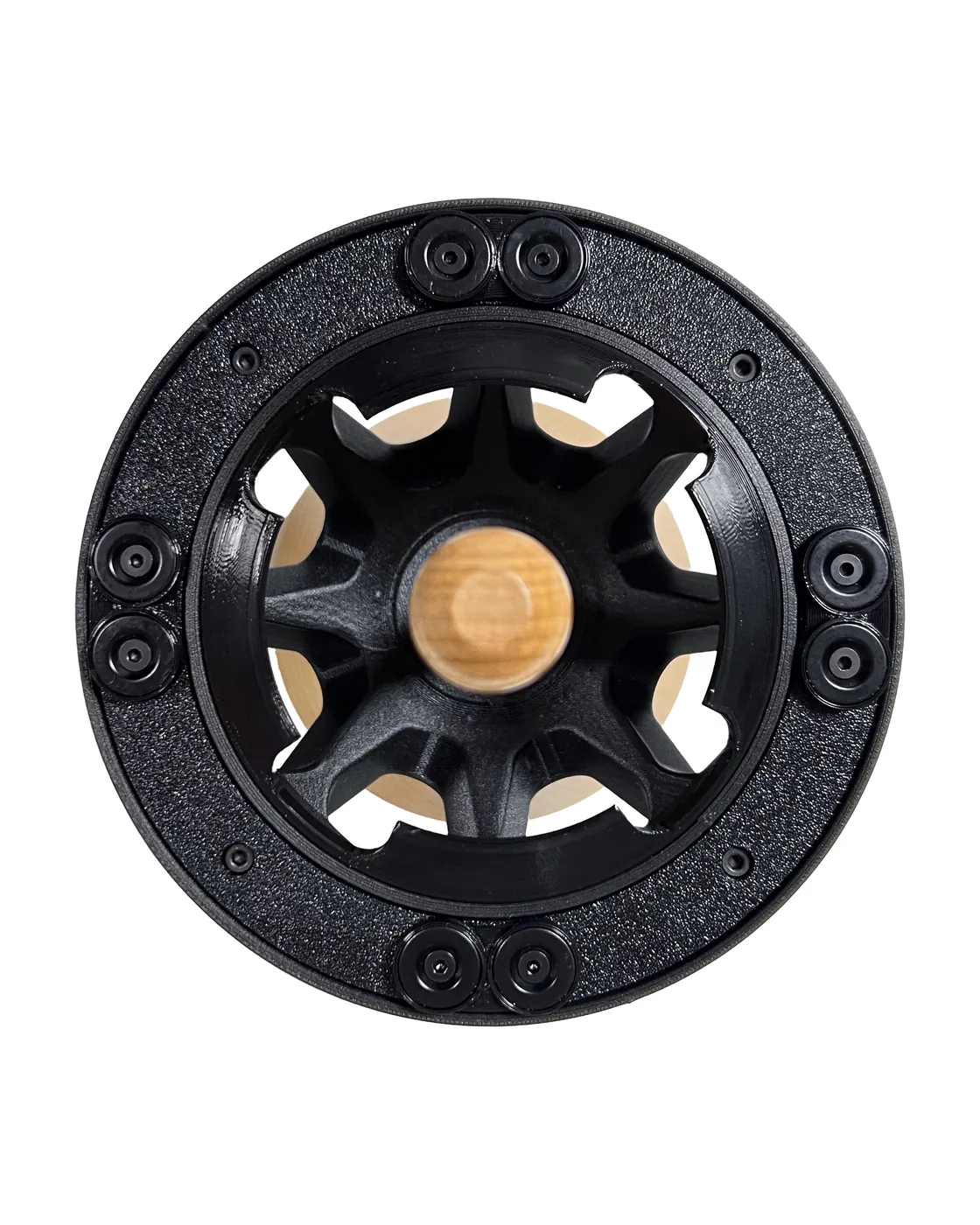
What sets Atlas apart is the mount. The instrument is neither screwed down nor strapped in: it rests on a floating disc held by eight scratch-resistant magnets. At the showroom my handpans are already on tripods — that is what lets me pass them from hand to hand without setting them down every time.
On your lap, seated, standing
Atlas advertises three playing positions for its wooden range: the instrument on your lap, seated on a chair, or standing. The Atlas Pro is advertised for two — seated and standing.
A magnetic mount
The handpan rests on a floating disc with eight magnets. Atlas states that they are covered and placed under the spots where the instrument touches the stand: nothing pinches, clamps or rubs the metal.
Made in Italy
Atlas is a small Italian workshop based in Conegliano, in the Veneto. Both stands are designed and built there.
It fits your handpan
Atlas states that the stand is designed for every handpan and tested with many makers, and that the magnets work with nitrided steel, stainless steel and Ember Steel.
It will not tip, and you can correct the ground
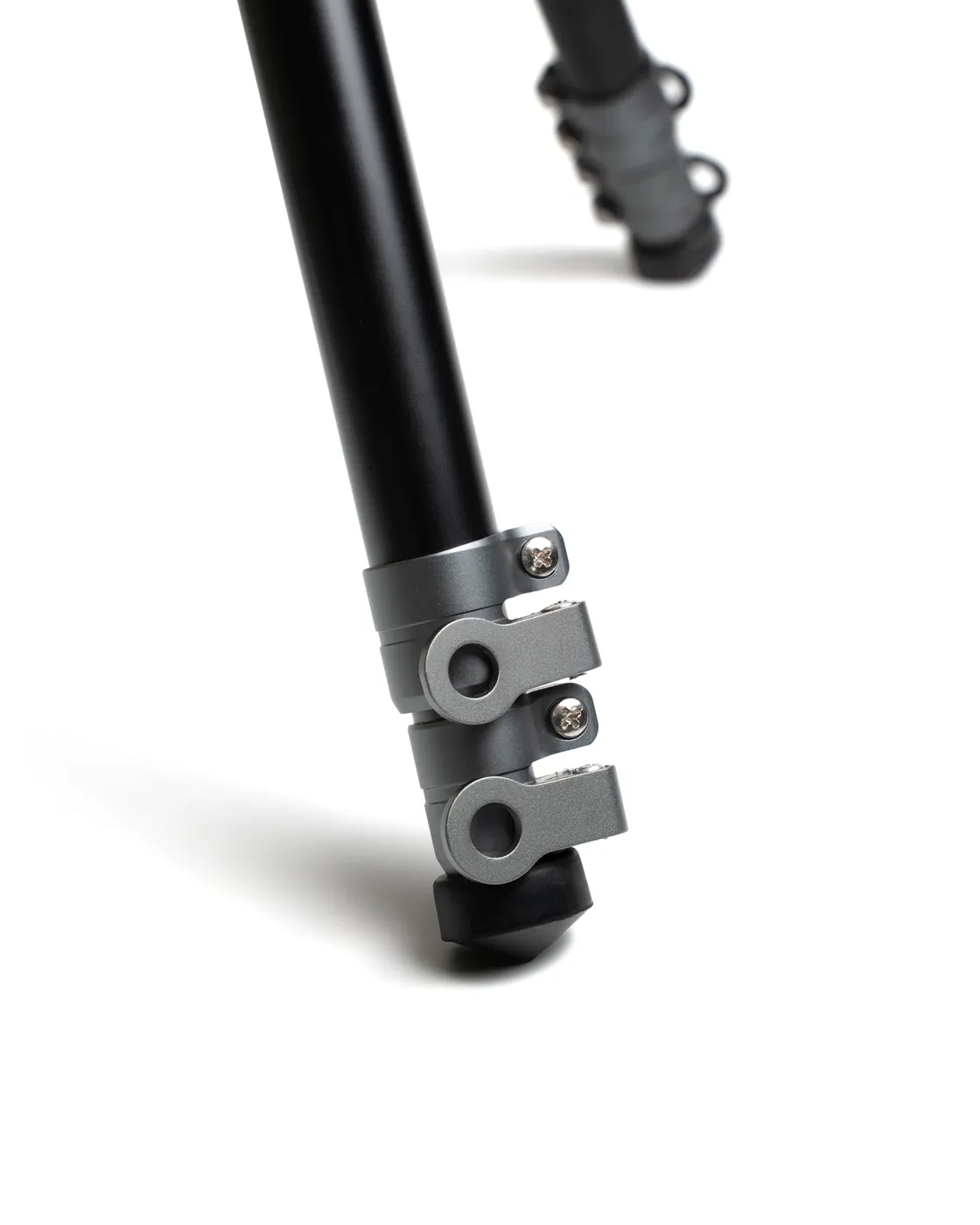
Atlas lists an anti-tip safety pin, a removable rubber centring collar, and legs adjustable by screwing — enough to make up for a floor that is not flat.
Fourteen days to change your mind
Atlas states free returns within fourteen days, with the return label supplied in the box. And if you can make it to the showroom, you will have decided before you even order.
And there is an irony I rather like: the same stand opens up the posture opposite to mine. Its head lets you play seated, without resting the instrument on your legs — a posture I have never practised.
The partnership with Atlas has just been confirmed: I am now an affiliate of the brand, and they sent me two demonstration stands for my gatherings. As long as nothing was signed I preferred not to announce anything here — now it is done, so I am saying it.
My code at Atlas: −10% With the code: Atlas Pro 250 € → 225 € · Atlas All 270 € → 243 €
The button copies the code, then opens the Atlas website in a new tab.
Two models
Both do the same job — holding the handpan on a floating magnetic disc. They do not do it with the same materials, nor over the same height range. Here is what the maker states, with nothing added.
About the Pro model, in his video:
« Well, I don’t know what makes it so much more pro, other than that it is really sleek, in aluminium, and that it goes up three times faster. So yes, it is much more pro and much lighter, with quality materials that last over time. Ultra fast, much slimmer, easy to carry and to store. The concept is exactly the same as the first one. »
« The Pro has one flaw: the wooden head is not offered, neither as an option nor included, and that is its only flaw, but it has to be said. Still, I prefer the Pro. So you cannot use the head on its own to play seated, whereas the wooden version lets you — but it takes longer to set up, is bulkier to carry and less adjustable. »
David Lesage, 6 September 2026 (translated from French)
Atlas Pro
Aluminium, telescopic, bag included
1 / 8
250 €public price 225 € with my code
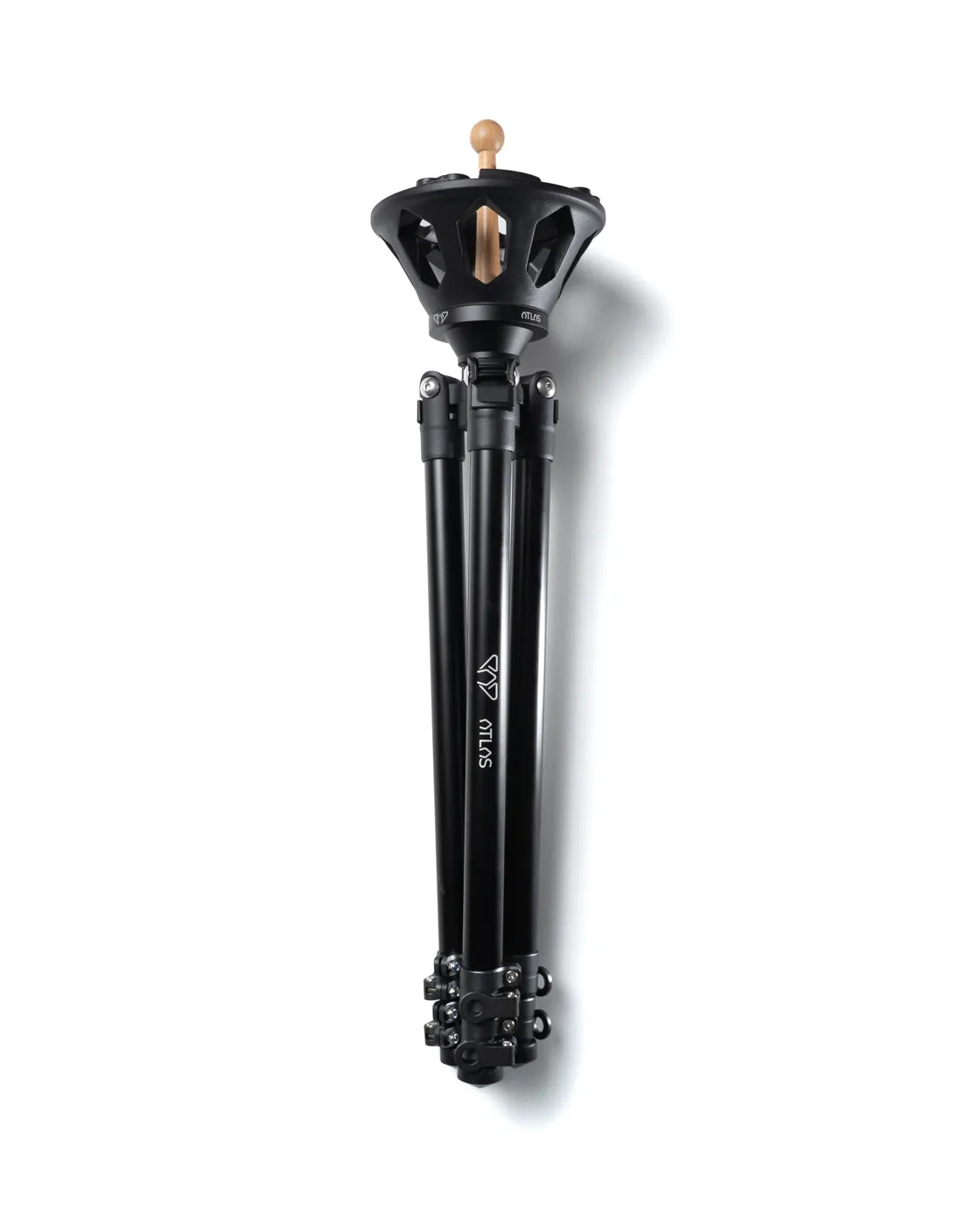
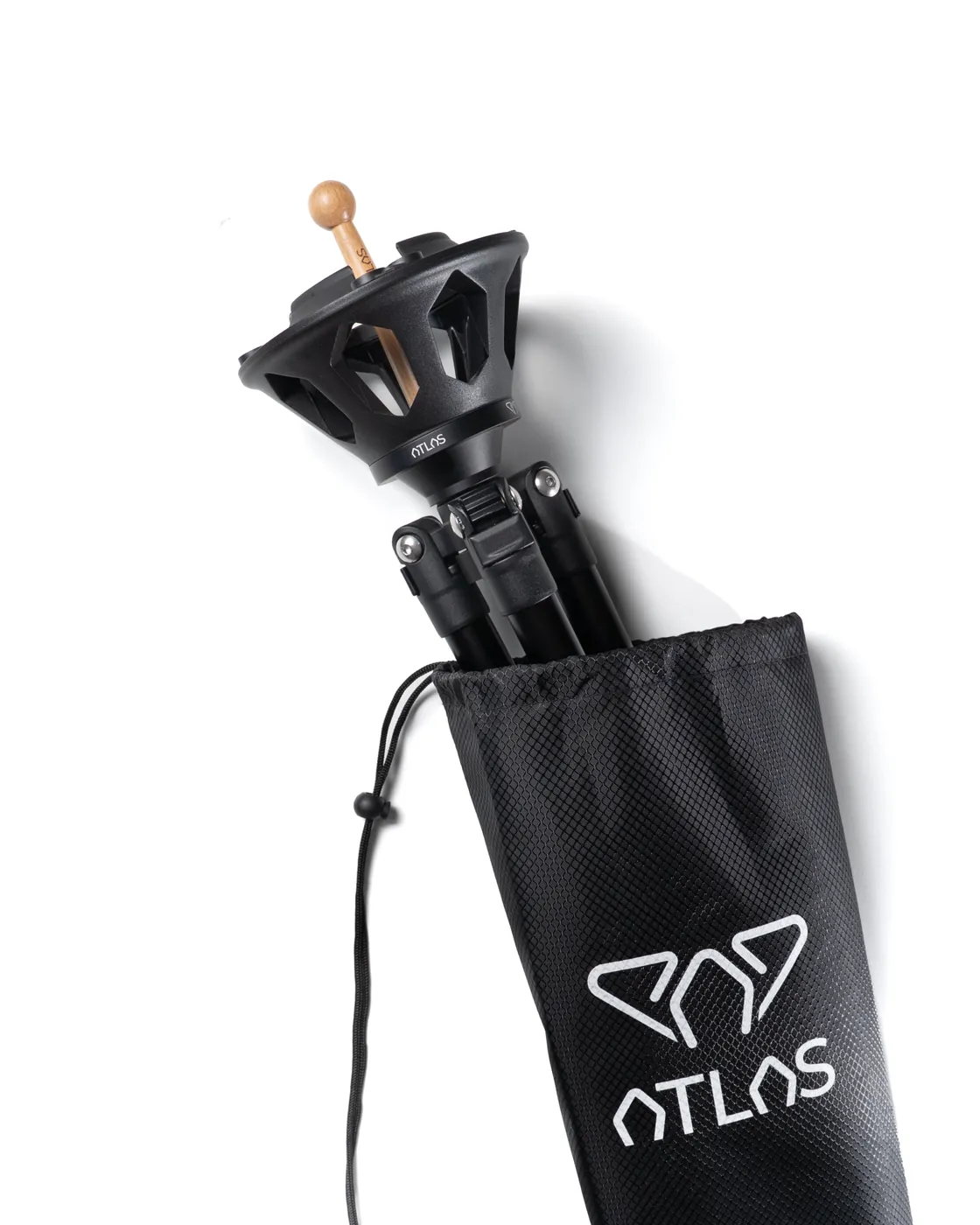
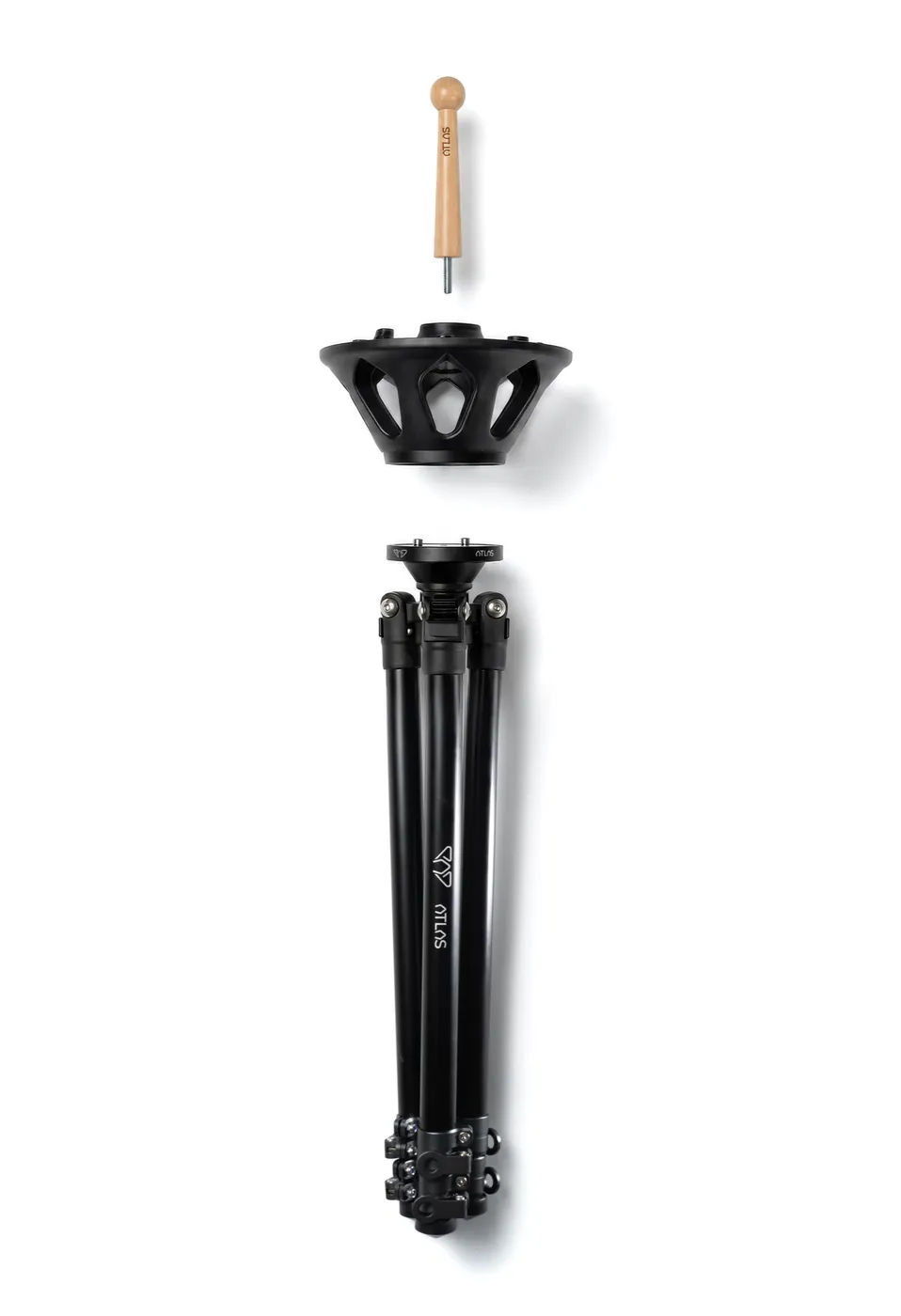
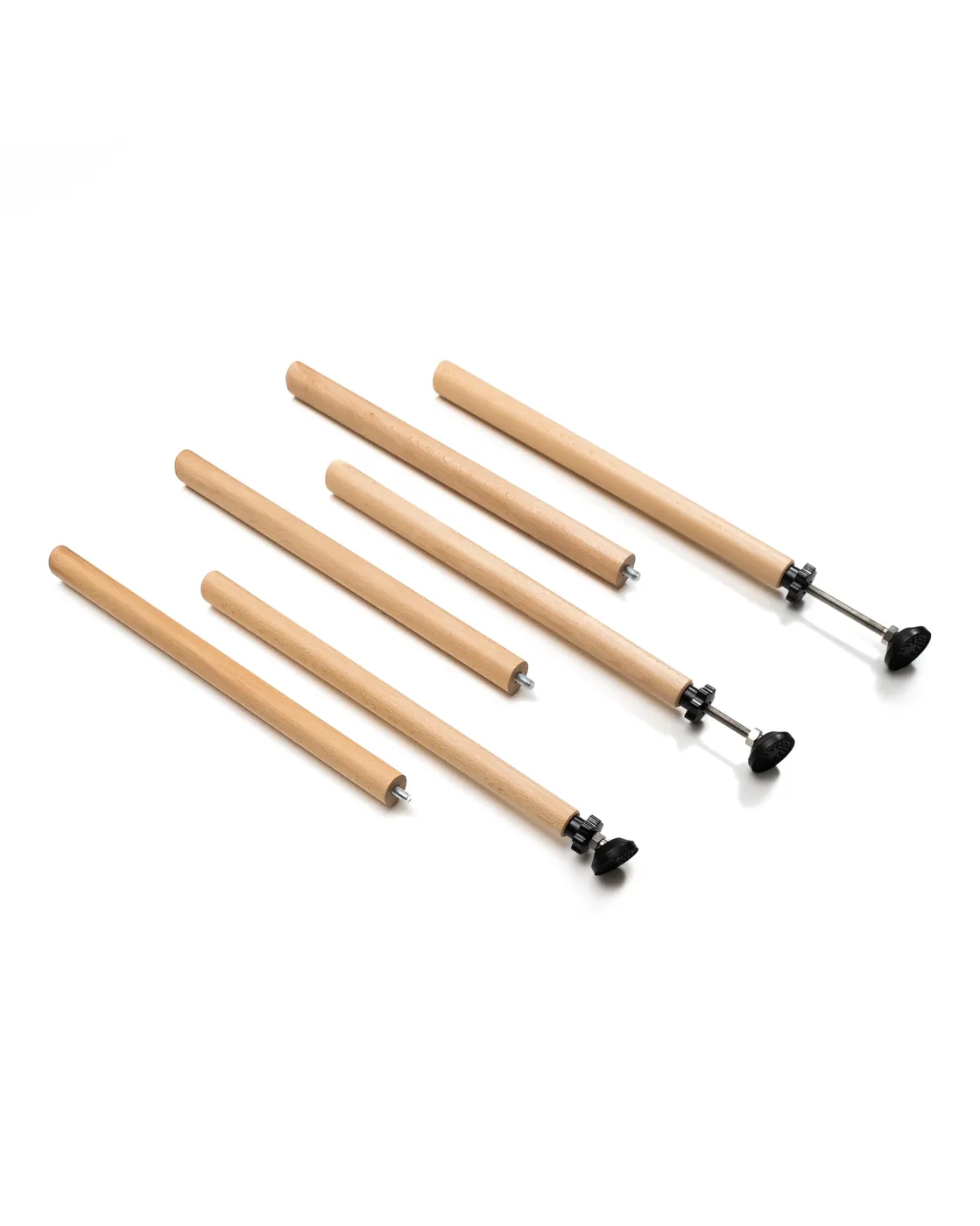
The aluminium model. Its three telescopic legs adjust continuously and independently of one another, a quick-opening system lets you set it up and fold it away in a few seconds, and the structure closes in on itself for transport. Atlas states 1.8 kg, and the Atlas Bag is included.
Height
51 cm to 109 cm
Weight
1.8 kg
Materials
Lightweight aluminium, telescopic legs
Mount
Floating disc, 8 scratch-resistant magnets
Playing positions
Seated or standing, continuous adjustment
Carrying
Atlas Bag carrying bag included
Atlas Body head
Wooden part not included
Public prices (VAT included) read on Atlas’s website on 20 October 2026. The price that counts is the one shown by Atlas when you order — shipping is extra.
The button copies the code, then opens the Atlas website in a new tab.
Atlas All
Wood, modular with extensions
1 / 7
270 €public price 243 € with my code
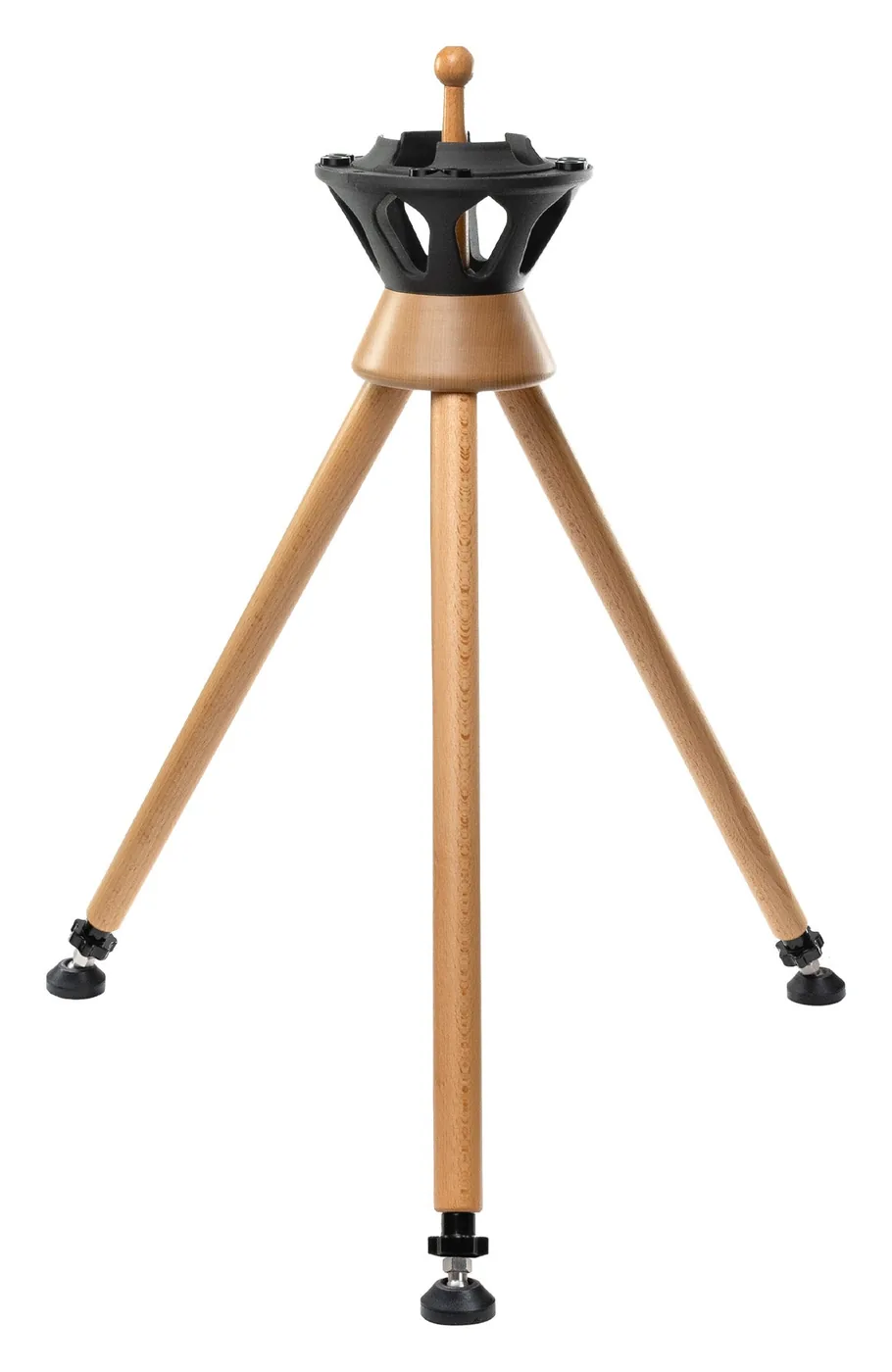
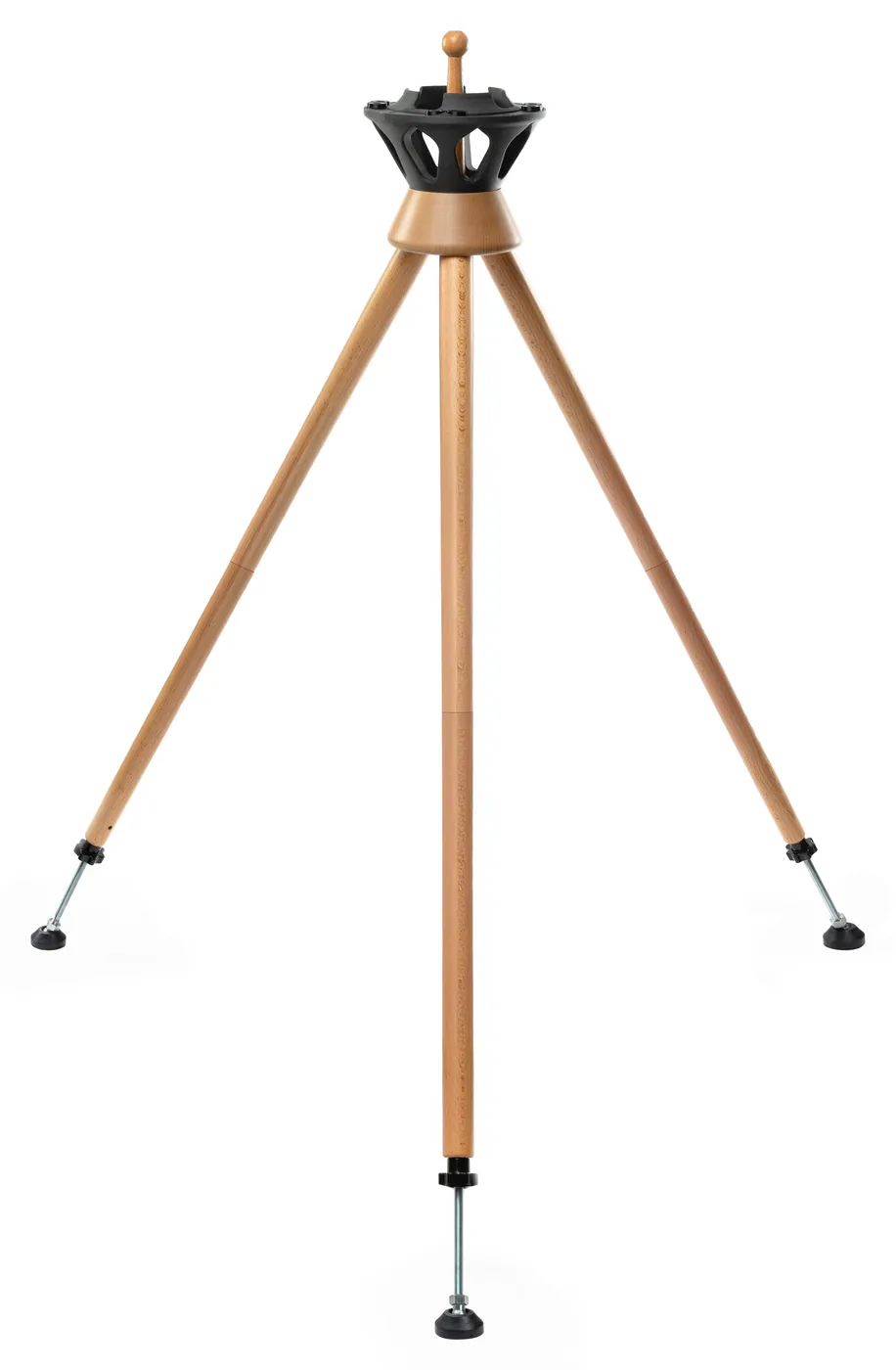
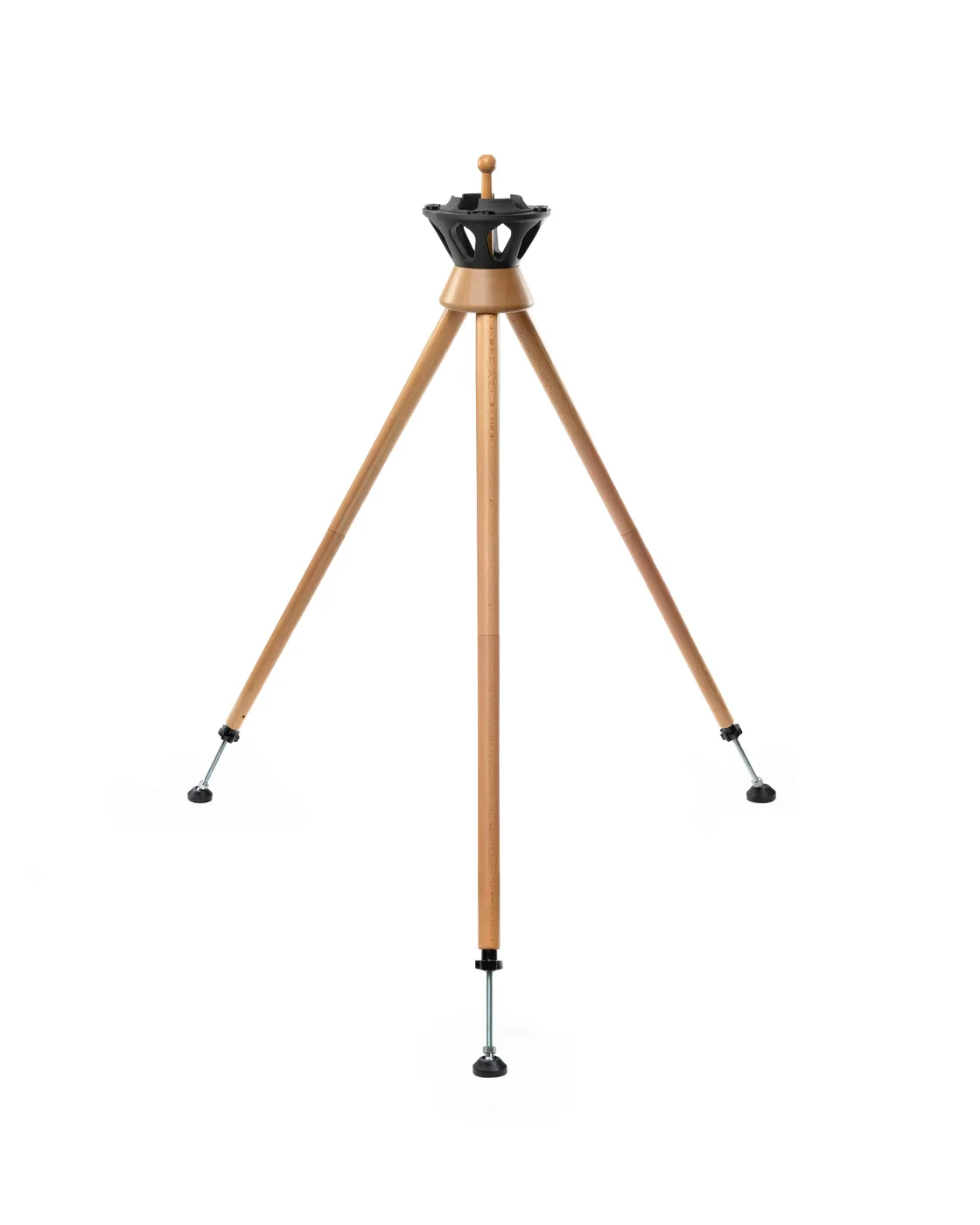
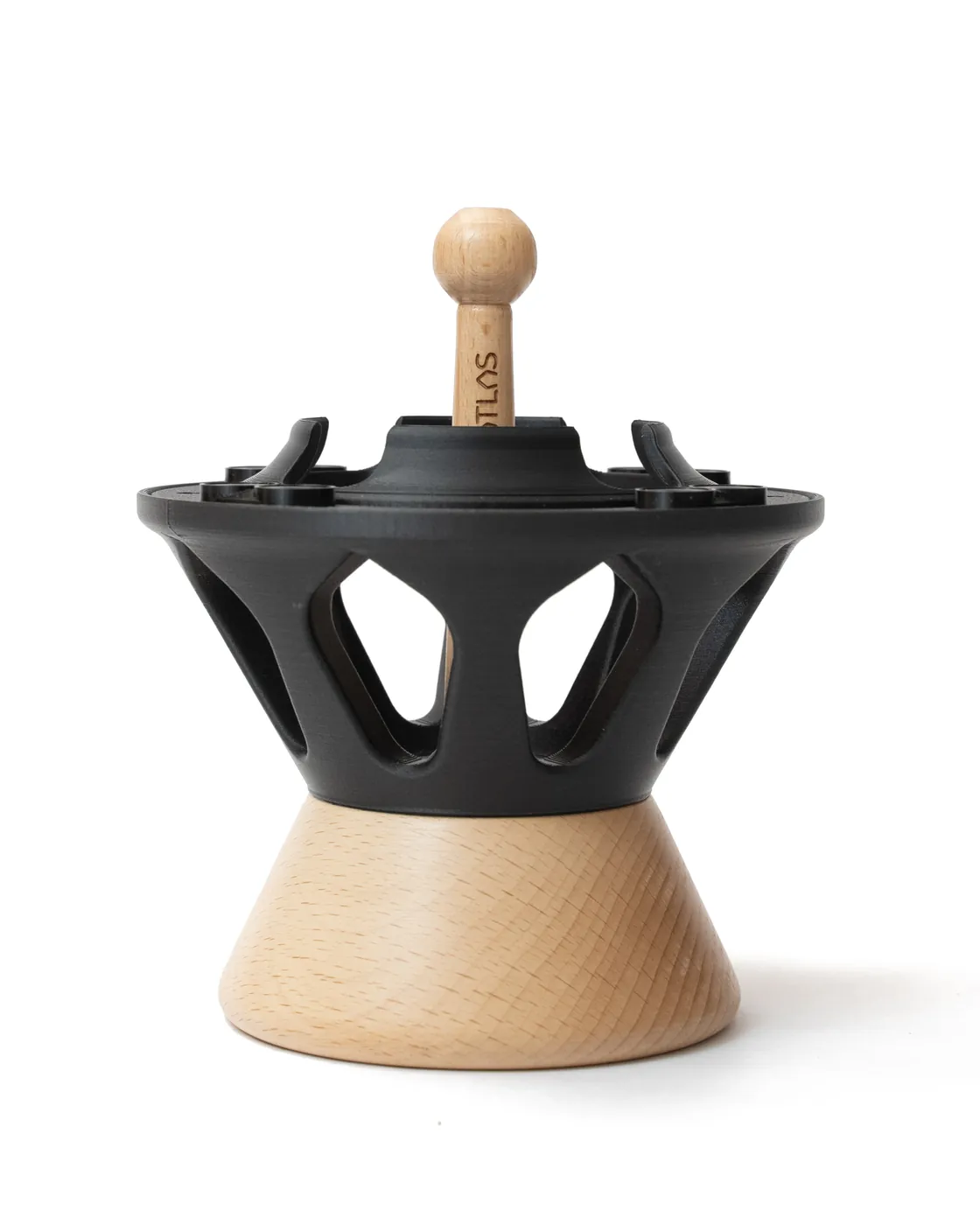
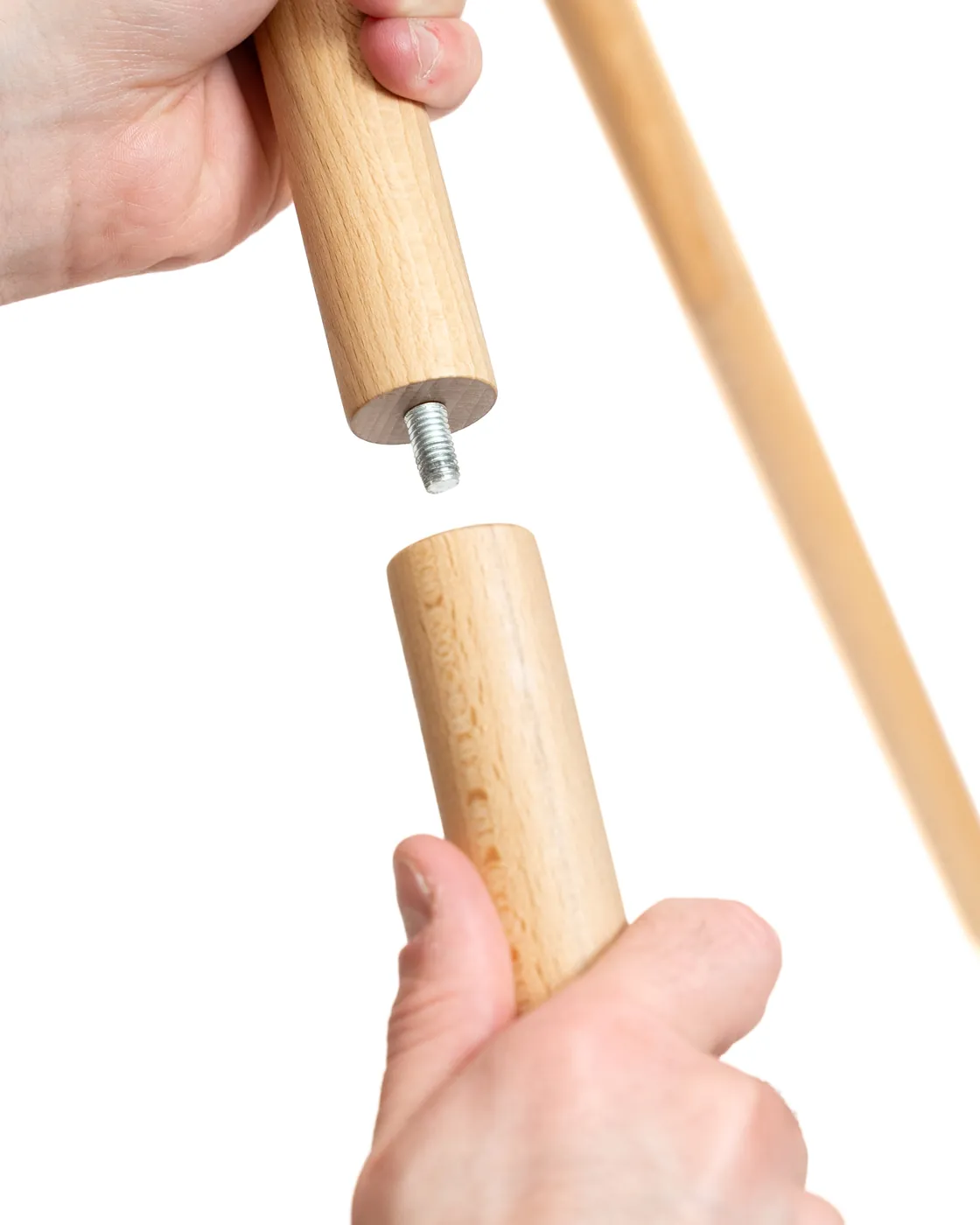
The wooden model. Its main body is 3D-printed and sits on a wooden base fitted with an anti-tip pin. The legs are 41 cm long and extend by 10 cm; screwing on the three 41 cm extensions takes it from the seated position to the standing one.
Height
50 cm to 96 cm
Materials
3D-printed body; wooden base, extensions and legs
Mount
Floating disc, 8 scratch-resistant magnets
Playing positions
On your lap, seated (without extensions) or standing (with extensions)
Atlas Body head
Included — it is the core module of the range
Public prices (VAT included) read on Atlas’s website on 20 October 2026. The price that counts is the one shown by Atlas when you order — shipping is extra.
The button copies the code, then opens the Atlas website in a new tab.
The head of the stand
A stand — but not only a stand
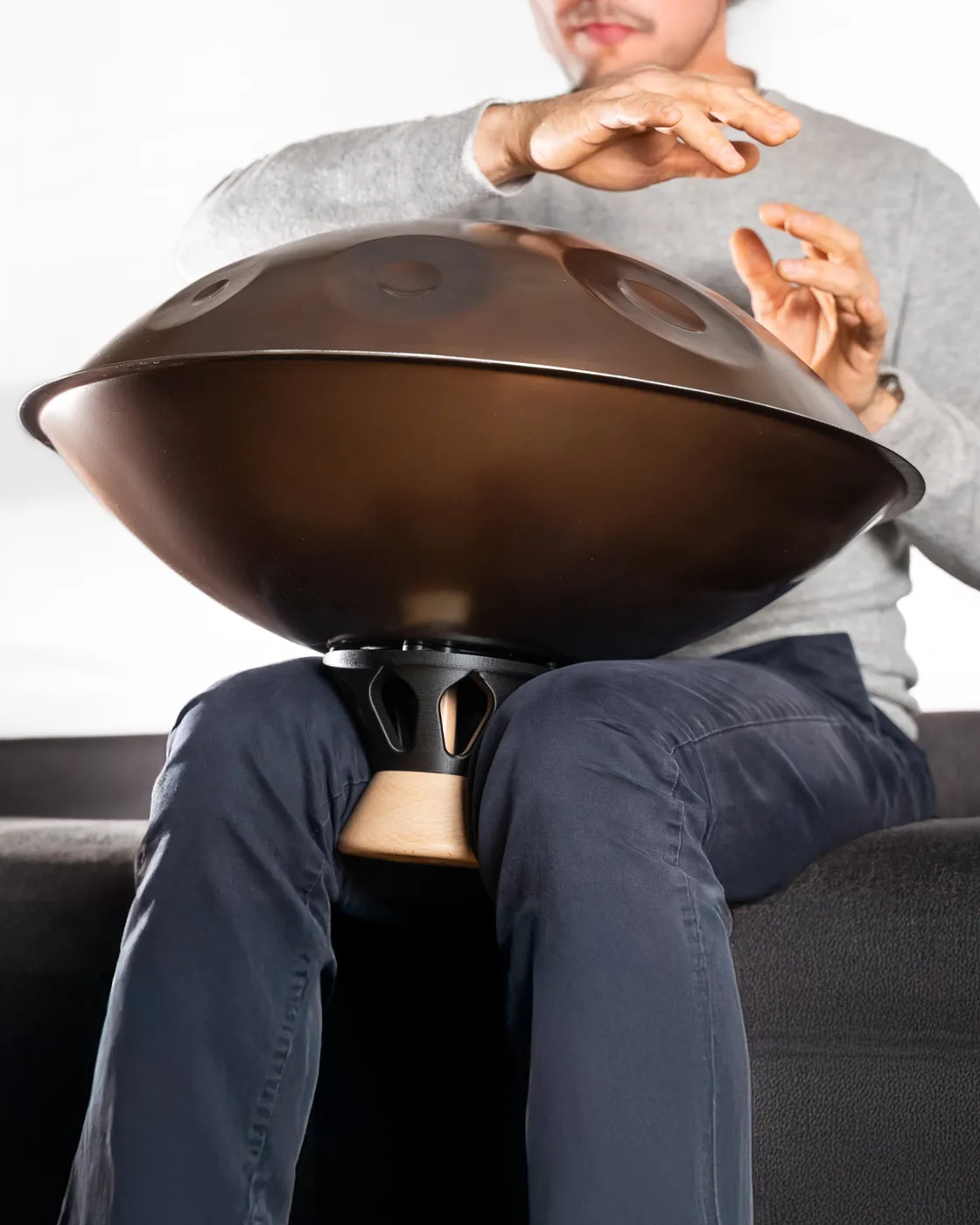
The upper part of the support, the one Atlas calls the Atlas Body, is not just a piece to screw legs onto. Held between your thighs, it carries the handpan above you while you play seated on a chair or a sofa — no legs, no tripod, and without resting the instrument on your lap.
The instrument no longer rests on you
The head carries the handpan, not your thighs. Atlas advertises three playing positions for its wooden range: on your lap, seated, standing.
The bottom notes stay reachable
The instrument is lifted off your body. Atlas emphasises that nothing gets in the way when you reach for the notes — which matters most if your handpan has bottom notes.
An open, hollow head
The crown is hollow and openwork. Atlas explains that this hollow shape lets the sound circulate without obstacles.
What Atlas says about the sound
Atlas writes that its stand “was born from the search for a better sound for your handpan”, that it “does not absorb vibrations and increases resonance”, and that “its hollow shape allows the sound to circulate without obstacles”. About the head alone, they add that it improves control of the instrument “without obstructing vibrations”.
Those are their words, not mine: when it comes to sound, I do not repeat anyone’s claim before hearing it myself. What I say about it is in my video — here it is.
On his old suction-cup stand, then on the Atlas head:
« This suction system has one flaw: it absorbs the vibrations of the handpan, and that is not great, because it means we are going to lose the sound of the pan — part of the sound, at least. »
« The fact that it has holes is really important, because it means that the sound of the handpan is going to be able to escape. »
The wooden range is modular: the head is the core part, you screw the legs onto it to get the Atlas Short, then the extensions for the Atlas All. Buying the Atlas All does give you all three positions.
Atlas Pro — the wooden part is not included
Marco Agri, the creator of Atlas, confirmed it to me directly: “atlas pro doesn’t come with the wood part”. The Pro adjusts from the seated to the standing position, but it does not carry the wooden head, the one used for playing on your lap. Better to know before ordering than when opening the box.
Atlas Body — the head on its own
Atlas also lists it separately (€165). It is what you look at if you only want lap playing, or if you want to grow a wooden set: the legs + extensions kit (€105) turns it into an Atlas Short, then an Atlas All.
All the parts are fully compatible
That is the other thing Marco Agri confirmed to me: “all parts are fully compatible with the others”. The most useful consequence: if you already own an Atlas All or an Atlas Short, you already have the wooden part — it fits straight onto an Atlas Pro, nothing is wasted. And if you are starting from scratch and want all three positions from the outset, the Atlas All is what gives them today.
Marco Agri, creator of Atlas — message of 20 August 2026
Atlas Body: 165 € → 148.50 € with the code (−16.50 €)
My code DAVID-ATLAS also works on the Atlas Body: −10% at checkout on the Atlas website.
The button copies the code, then opens the Atlas website in a new tab.
What happens next
Try them before you buy
Both stands are at the showroom in Paris 20th, alongside the handpans. You can put an instrument on one, set the height, play standing, and see which of the two suits you — without buying anything.
The showroom set up before a gathering: my two Yishama acoustic handpans and my two Neotone electronic handpans, each on its own stand — four instruments, four different stands. The two Atlas stands have since taken their place there, and that is where you will be able to try them.
Both models side by side, not two photographs
A handpan on top: you set the height yourself, seated then standing
Without buying anything — you leave with your own opinion, not a box
Orders go through the Atlas website. They state around €12 shipping for Europe, and returns are free within 14 days, with the return label supplied in the box.
Delivery times and warranty length are not stated on their site: ask them before ordering, or write to me and I will ask on your behalf.
My code at Atlas
Here is my code: −10% on all Atlas products, Atlas Body included. Enter it at checkout on the Atlas website — whether you order online or after coming to try them at the showroom.
With the code: Atlas Pro 250 € → 225 € · Atlas All 270 € → 243 €
The button copies the code, then opens the Atlas website in a new tab.
I am an Atlas affiliate: when an order goes through this code, I earn a commission. It adds nothing to what you pay, and it changes nothing about what I wrote above.